
Trusted slab leak detection
Trusted Slab Leak Detection in Littleton, CO
Warm floor, running-water sound, no visible pipe? The source may be below the slab. Our expert slab leak detection service uses focused testing to narrow leaks below concrete without treating every floor mark as the source. A pipe below concrete can leak without showing the exact break above it. Warm flooring, running-water sounds, pressure changes, and a rising bill are compared together so we can mark the smallest practical search zone before repair access is planned.
About this service
A careful search built around slab leak detection.
A pipe below concrete can leak without showing the exact break above it. Warm flooring, running-water sounds, pressure changes, and a rising bill are compared together so we can mark the smallest practical search zone before repair access is planned.
A break under concrete rarely sits right below the wet or warm spot on top of the floor. We start by noting which floors feel warm or damp, sketch the hot and cold lines under the slab, then pick the first test that fits that layout.
Owners call this service when they want the break found before anyone cuts into concrete. Expect straight talk, a search zone drawn as small as the readings allow, and a clear warning if the clues split two ways.
Why owners call us for slab work
Listen before you break concrete.
Every member of our Littleton team knows slab work punishes guesses, so each test follows a floor clue, finished floors stay covered while we listen and scan, and results are shared in everyday words. You finish knowing what the readings support and where the repair should begin.
Sound and heat tools made for under-slab lines lead the search, not tools picked at random.
We listen and scan through the surface first, so concrete opens only where the readings agree.
Warm spots, sound levels, and pressure drops are explained in kitchen-table words as we find them.
Our crew has traced leaks under Littleton floors since 2018, in homes old and new.
Under-slab method
Listening through concrete to the break.
Heat first, sound second, marks last: the floor itself tells us where to go deeper. Following that order keeps the repair zone small enough for your crew to open with care.
Confirm the line and floor clues
Your warm spot, damp edge, or water sound is paired with the line layout under the slab before testing starts.
Compare sound and temperature readings
Listening gear and heat scans sweep the floor in a grid, and the readings are weighed where they cross.
Mark the smallest practical search zone
Only the square of floor where sound and heat peak together gets marked, with notes your repair crew can trust.
Three slabs, before and after
Small marks on the floor, big savings under it.
Each slab leak detection project begins with a broad warning sign and ends with a smaller, evidence-led area for repair. Each pair shows a whole-floor worry at the start and a single marked square by the end.
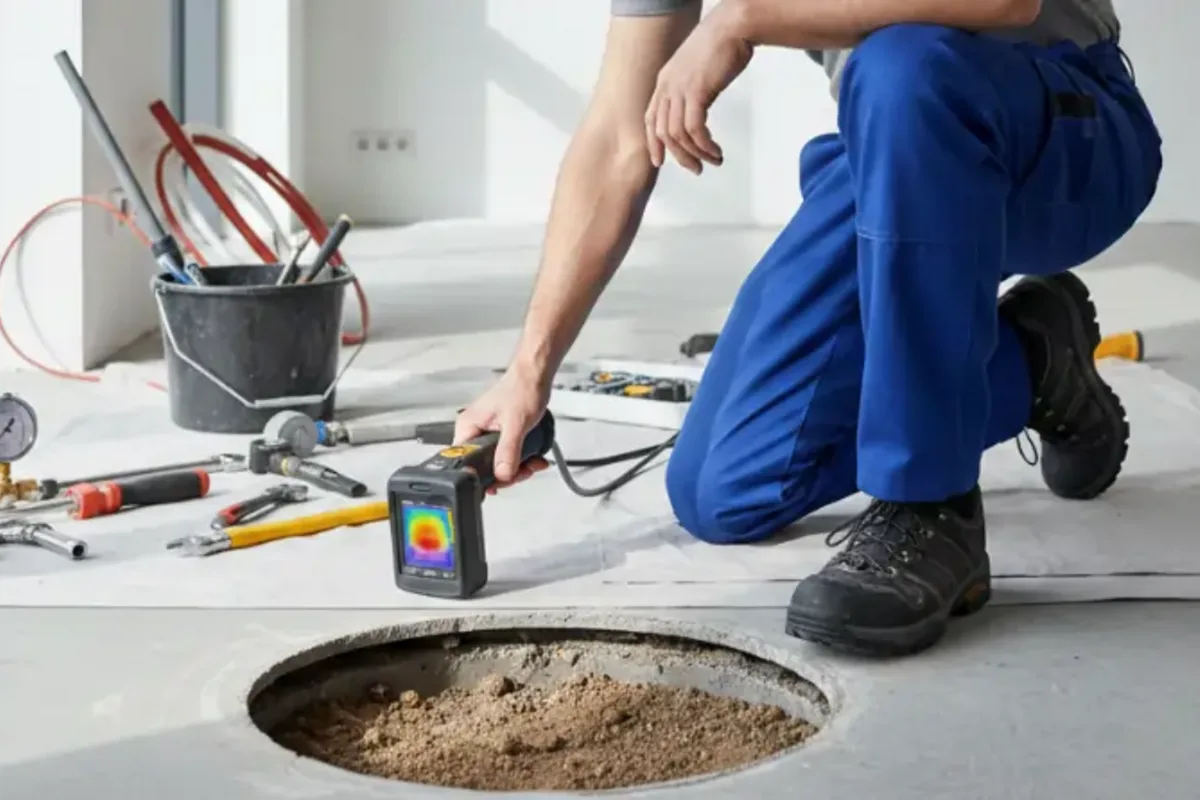 Before · Project 01
A warm floor spot stays in one area or slowly grows. We compare surface temperatures across nearby rooms and pair those readings with the hot-water pipe route instead of treating heat alone as proof.
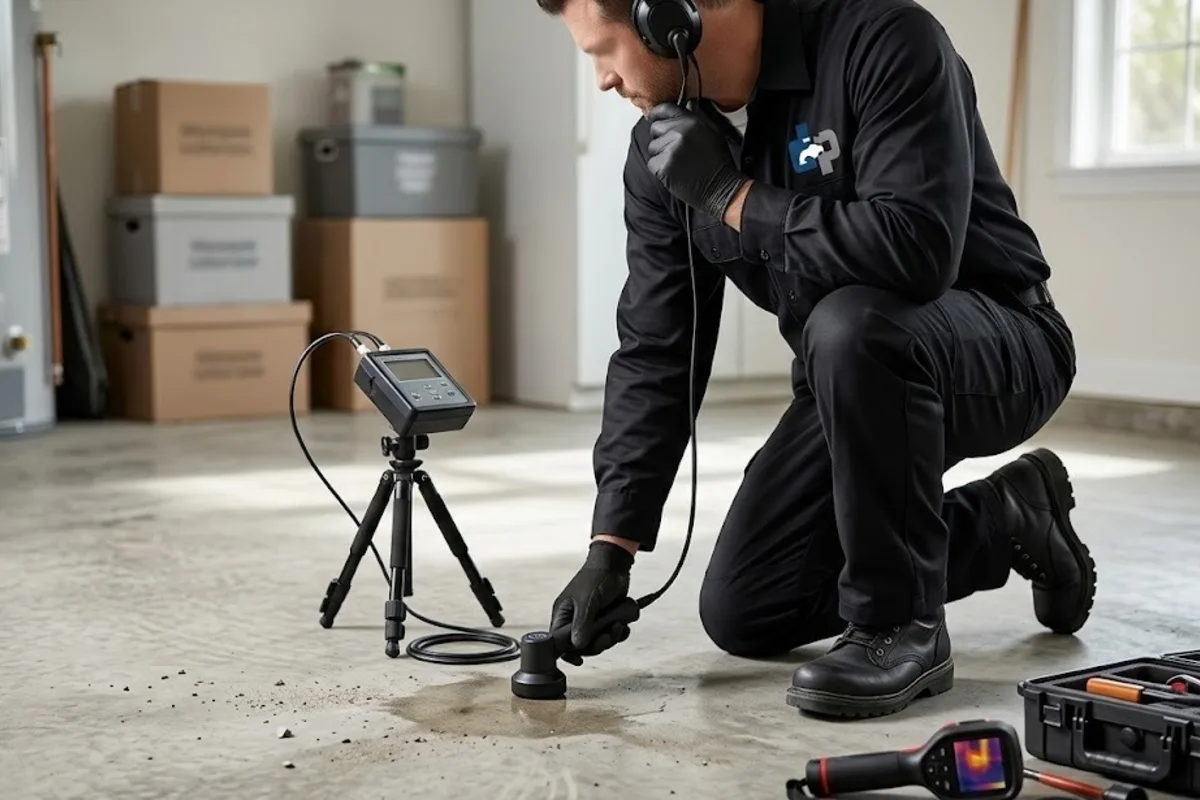 After · The repair area is marked
Heat and sound peaked at the same square of concrete, so the repair crew knew exactly where to start.
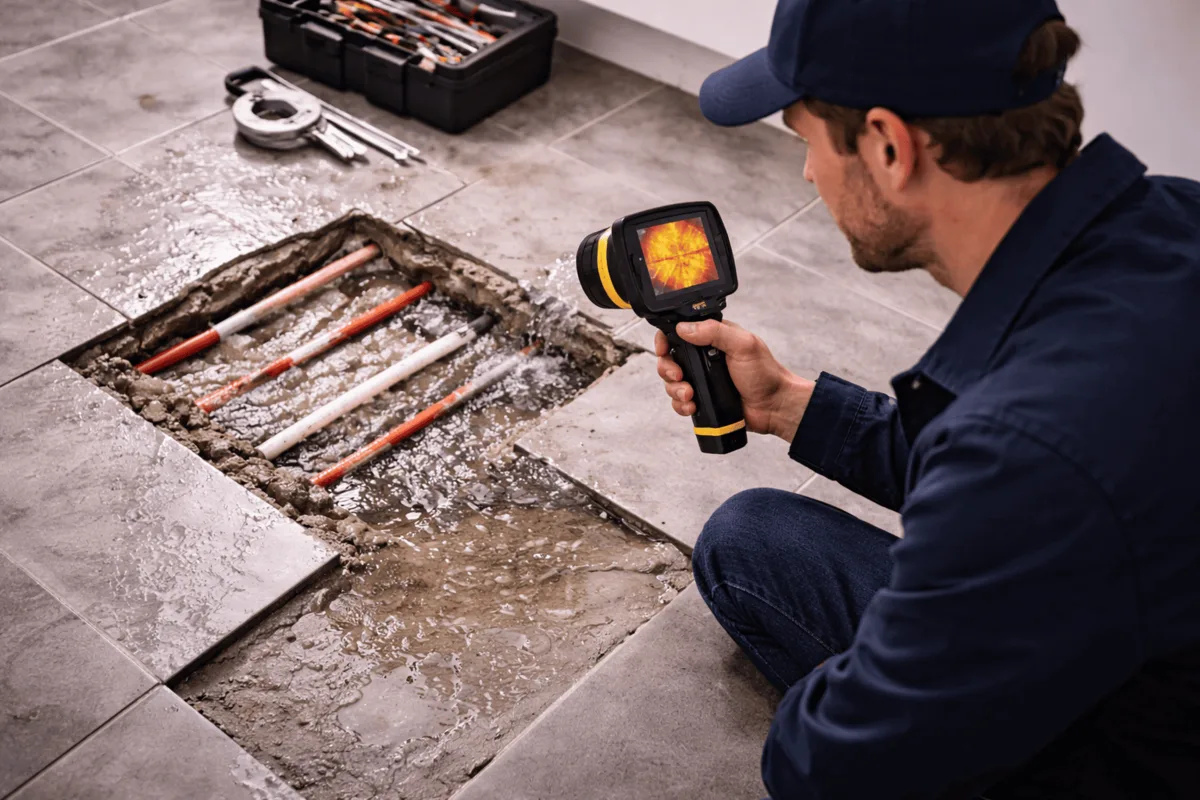 Before · Project 02
You hear water under the floor when taps are off. Acoustic listening at several points helps us compare sound strength and separate pipe noise from HVAC, drains, and normal building sounds.
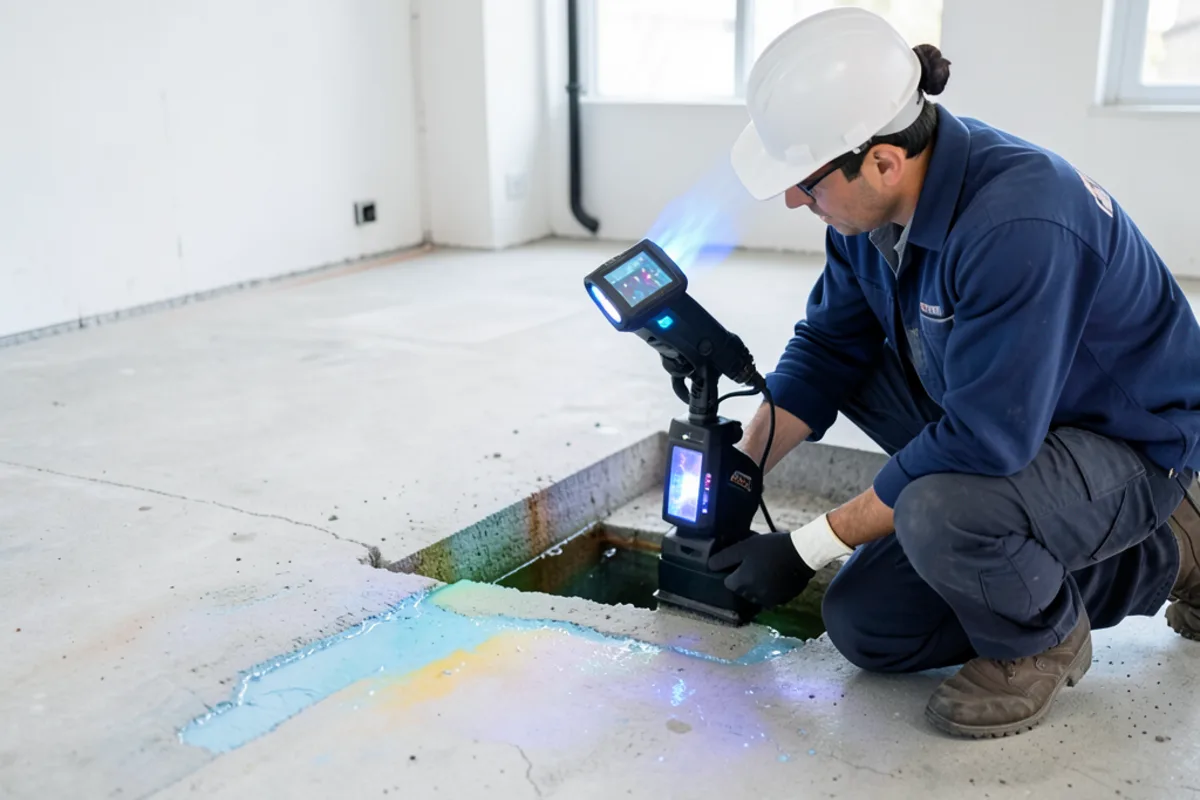 After · The repair area is marked
By lining up the damp edges with the loudest point under the floor, we shrank the dig to one marked area.
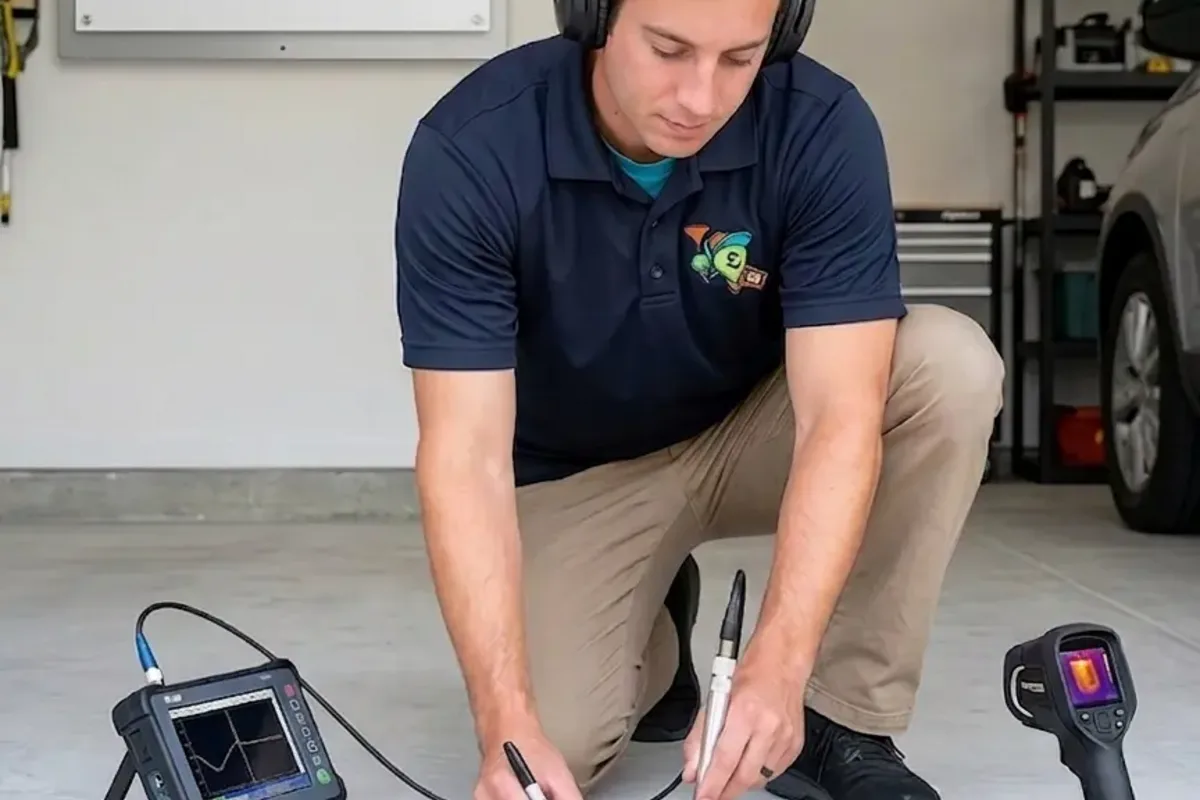 Before · Project 03
Flooring edges feel damp or the water bill rises. We check meter activity, pressure behavior, and moisture patterns to confirm whether the evidence supports an active pressurized line below the slab.
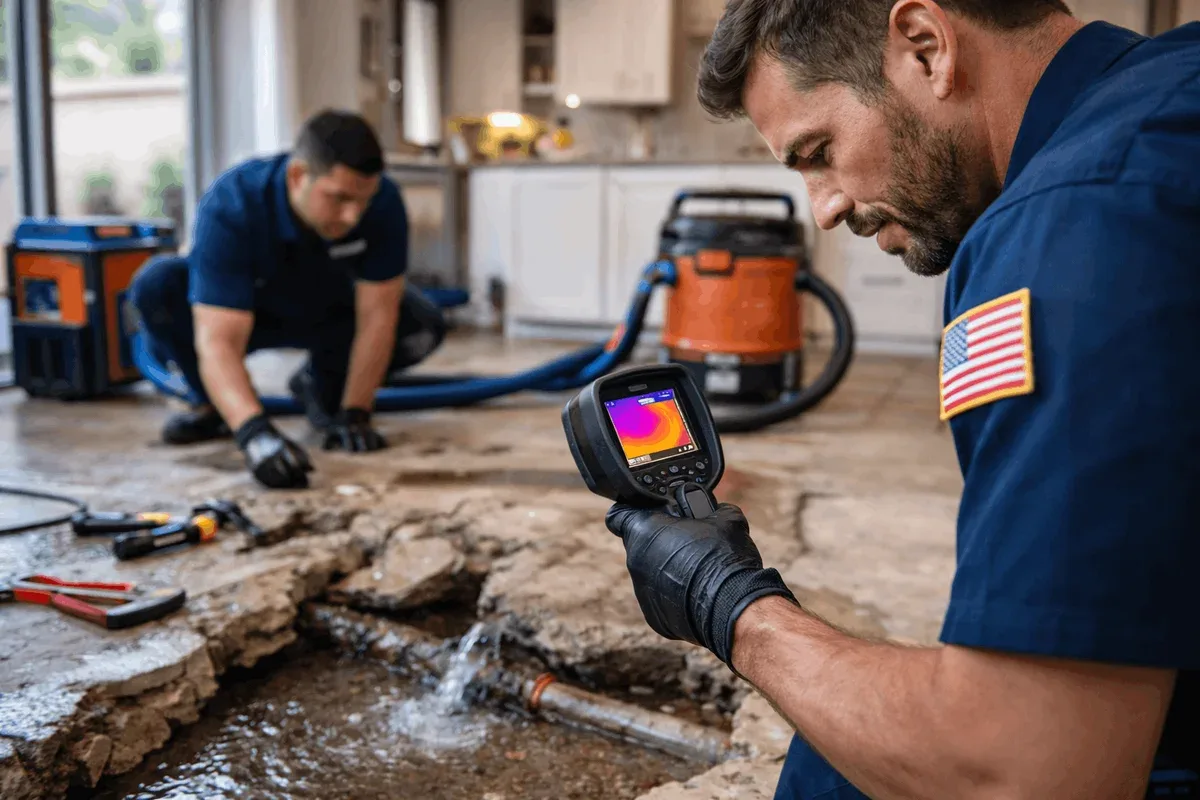 After · The repair area is marked
The result was a named spot under the slab, the readings that proved it, and no reason to open the rest of the floor.
Signs from under the floor
Floor clues, read one by one.
Heat, damp, or sound that keeps returning means a line below is still losing water. Each clue gets its own heat, sound, or pressure check, look-alike causes like a running toilet get crossed off, and the search zone shrinks to the slab that truly needs work.
A warm patch across one part of the floor
Why it matters: Warmth that stays in one patch often follows a hot-water line, and a break there runs day and night under the concrete.
A warm floor spot stays in one area or slowly grows. We compare surface temperatures across nearby rooms and pair those readings with the hot-water pipe route instead of treating heat alone as proof.
What we check under the floor next: Confirm the line and floor clues. Heat readings across the whole room show whether that warm patch sits on a hot line or spreads from one break point.
Flooring that feels damp beside walls or cabinets
Why it matters: Damp edges that keep spreading mean water is traveling out from a line below, soaking new material as it goes.
You hear water under the floor when taps are off. Acoustic listening at several points helps us compare sound strength and separate pipe noise from HVAC, drains, and normal building sounds.
What we check under the floor next: Compare sound and temperature readings. Where damp edges and the strongest sound meet, we draw the first repair square and leave the dry floor untouched.
You hear water running in a quiet house
Why it matters: Sound you can hear with every tap off means water is moving somewhere it should not be, usually under pressure.
Flooring edges feel damp or the water bill rises. We check meter activity, pressure behavior, and moisture patterns to confirm whether the evidence supports an active pressurized line below the slab.
What we check under the floor next: Mark the smallest practical search zone. With taps off and the sound still clear, we follow it across the slab until it peaks, then mark that peak for repair.
Beyond the slab
Help for every other pipe and line.
This page focuses only on slab leak detection. If your clues come from a wall, a yard, or a pool instead, the twelve services below cover those systems too.
Slab Leak Detection reviews
What homeowners say about slab work.
Every review below is written for slab leak detection. In each one, a warm floor, a damp edge, or a sound in the slab started the call, and the finish was one small marked square.
Locations we serve
Slab Leak Detection across Littleton-area communities.
We test slabs in houses, rentals, and workplaces spread over 21 neighborhoods around Littleton. Pick your area below for the local picture, or call us with the address and we will take it from there.
Common clues include a warm floor spot, damp edges, reduced pressure, a moving meter, or the sound of water under the floor.
Detection starts with non-invasive tools. Repair access is a separate step and should be based on the evidence gathered during the search.
Yes. A pressurized line below concrete can run continuously and increase water use even when the leak is not visible.
A normal pipe warms a wide path and cools down. A leak keeps one area warm, often with meter movement or sound. We compare several points before calling it a leak.
Yes. The house is quieter and other water use stops at night, so heat and sound from a pressurized line below the slab are easier to notice.
We mark the area where sound, temperature, and meter evidence agree most strongly, and we explain how confident the reading is before any floor is opened.
Over time, steady water loss can soften soil below concrete and affect flooring above it. That is why a warm spot should not be watched for months.
Cold-line leaks may not warm the floor. Meter movement, damp edges, and acoustic readings still give us a path to follow.
Littleton office
Local slab leak detection.
Our base sits in Littleton, close to the slab homes and shops we serve in every direction. Ring us before you come by, and we will spend that time on the floor clues at your property instead.
2260 W Chenango Ave #400, Littleton, CO 80120DirectionsReady to know what hides under your floor?
Call Littleton Leak Solutions and tell us where the floor feels warm, damp, or loud. We will help you pick the one safe step that fits those clues.
Call (720) 715-9731