
Precise ceiling & wall leak tracing
Precise Wall & Ceiling Leak Tracing in Littleton, CO
The stain is where water stopped, not always where it started. Expert wall and ceiling leak tracing uses moisture patterns and temperature changes to follow water toward its likely source. Water follows framing, pipe surfaces, gravity, and drywall seams, so the visible mark may sit far from the source. Thermal and moisture patterns are compared with rooms, fixtures, and weather to trace the direction of travel.
About this service
A careful search built around ceiling & wall leak tracing.
Water follows framing, pipe surfaces, gravity, and drywall seams, so the visible mark may sit far from the source. Thermal and moisture patterns are compared with rooms, fixtures, and weather to trace the direction of travel.
A brown ring on drywall tells you where water pooled and spread, not where it first got in, and the true entry point can sit rooms away. So we ask when the mark grows, chart the pipes and rooms above it, and begin with the gentlest reading that can show which way the water moved.
Owners book this tracing work when they want the path of the water mapped before any ceiling or wall is cut open. What you get is plain talk, one marked area to check first, and a straight answer if the trail splits toward two possible sources.
Why stains need a traced source
Readings before cuts. Always.
Our Littleton tracing crew picks tools with a purpose on ceiling and wall jobs, holds off on cutting drywall while readings can still guide us, and explains each image and number in everyday words. You end the visit clear on what the proof supports and what should come next.
Moisture meters and heat images guide the trace, so drywall stays whole while the wet path is still being mapped.
Surface checks come first on this service, and openings are saved for spots the readings strongly support.
We talk you through the heat picture and the damp readings, show the likely path, and name the next move.
Tracing stains across Littleton ceilings and walls has been core work for our local crew since 2018.
Tracing, step by step
From a stain on the surface to the path behind it.
Tracing work moves in order, because the edge of a damp patch tells us where to read next. That steady path keeps the search small and gives repair crews a first spot backed by proof.
Map the edge of the damp area
We begin at the stain and the pipes hidden above it, so the first reading answers a real question.
Compare rooms, fixtures, and pipe paths
Readings move outward from the wet edge, and we chase only the direction where damp keeps rising.
Use thermal and moisture readings to trace direction
We mark the patch where the trail starts and explain what the repair crew will find there.
Ceiling traces, before and after
Three stains that led back to a single source.
Each ceiling & wall leak tracing project begins with a broad warning sign and ends with a smaller, evidence-led area for repair. Below, three wide and worrying marks are followed, reading by reading, until one useful repair step stands out.
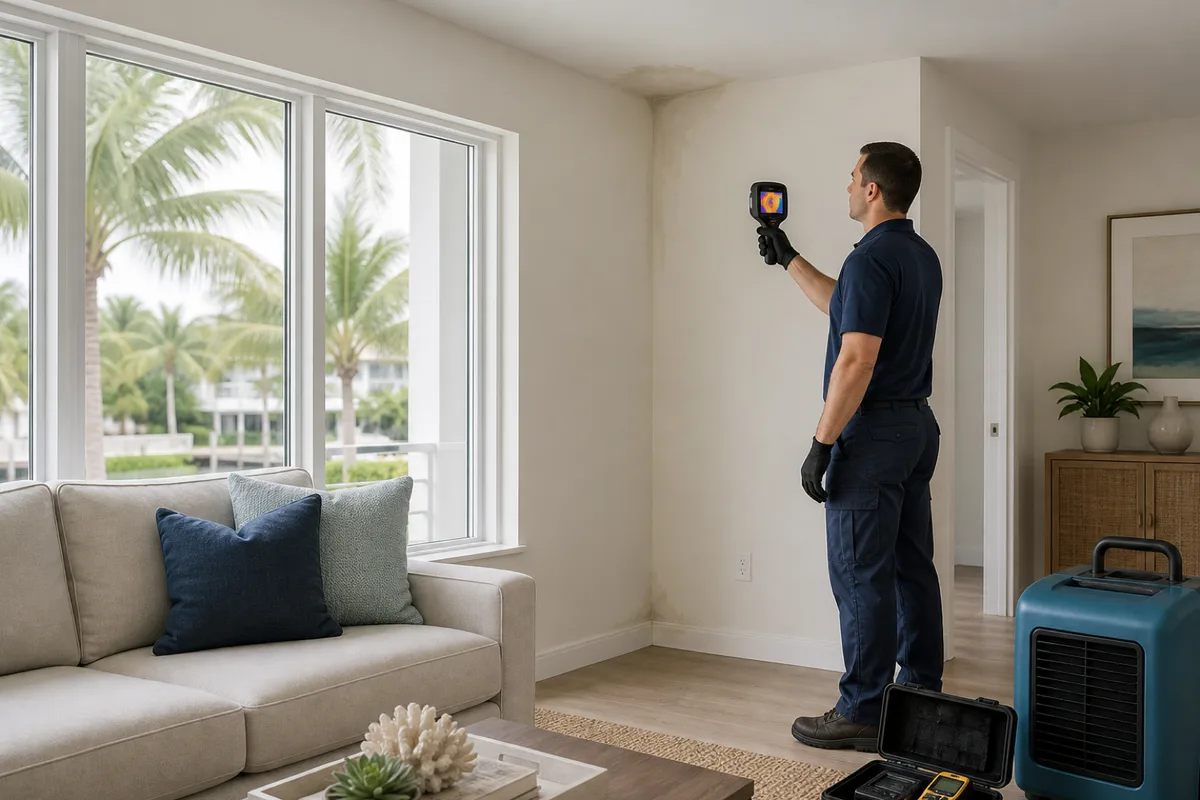 Before · Project 01
A stain returns after the paint dries. We map its edge over time and compare nearby plumbing, roof exposure, and fixture use to identify which event makes it active.
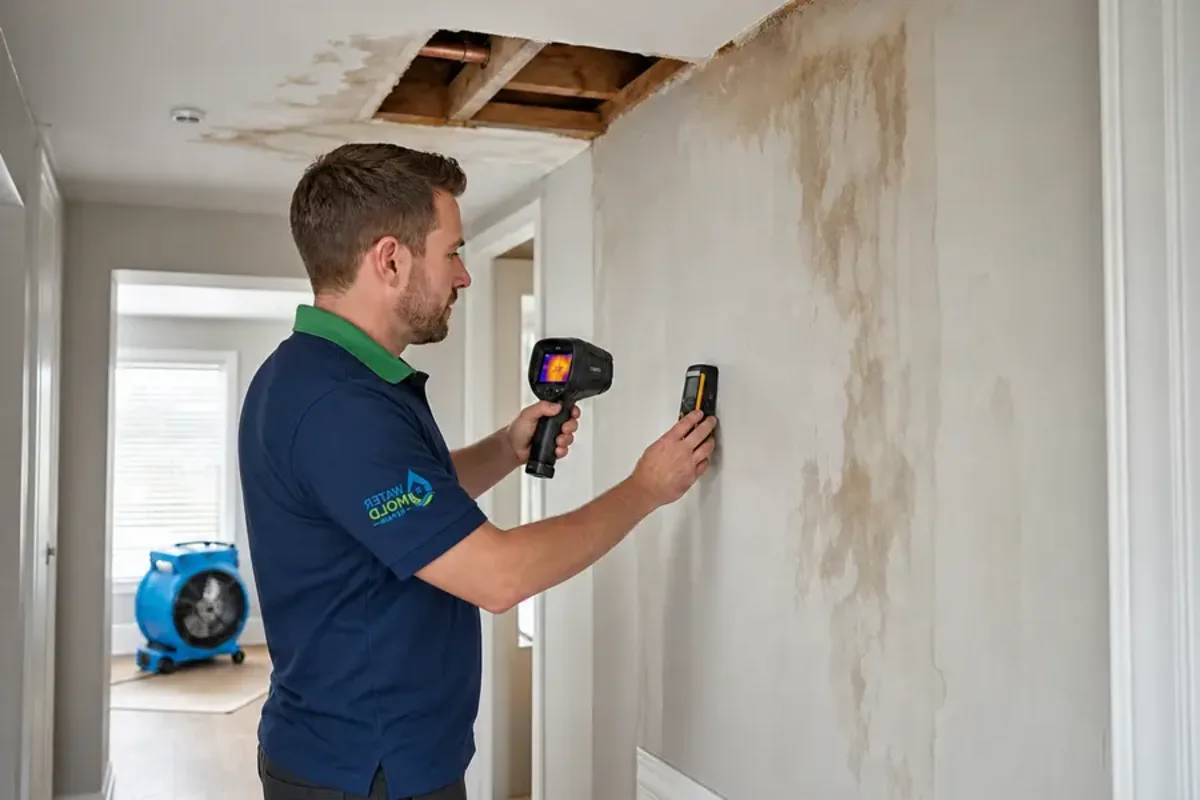 After · The source path is known
Watching the stain’s edge after rain and after showers told us which event fed it, and the search followed that lead.
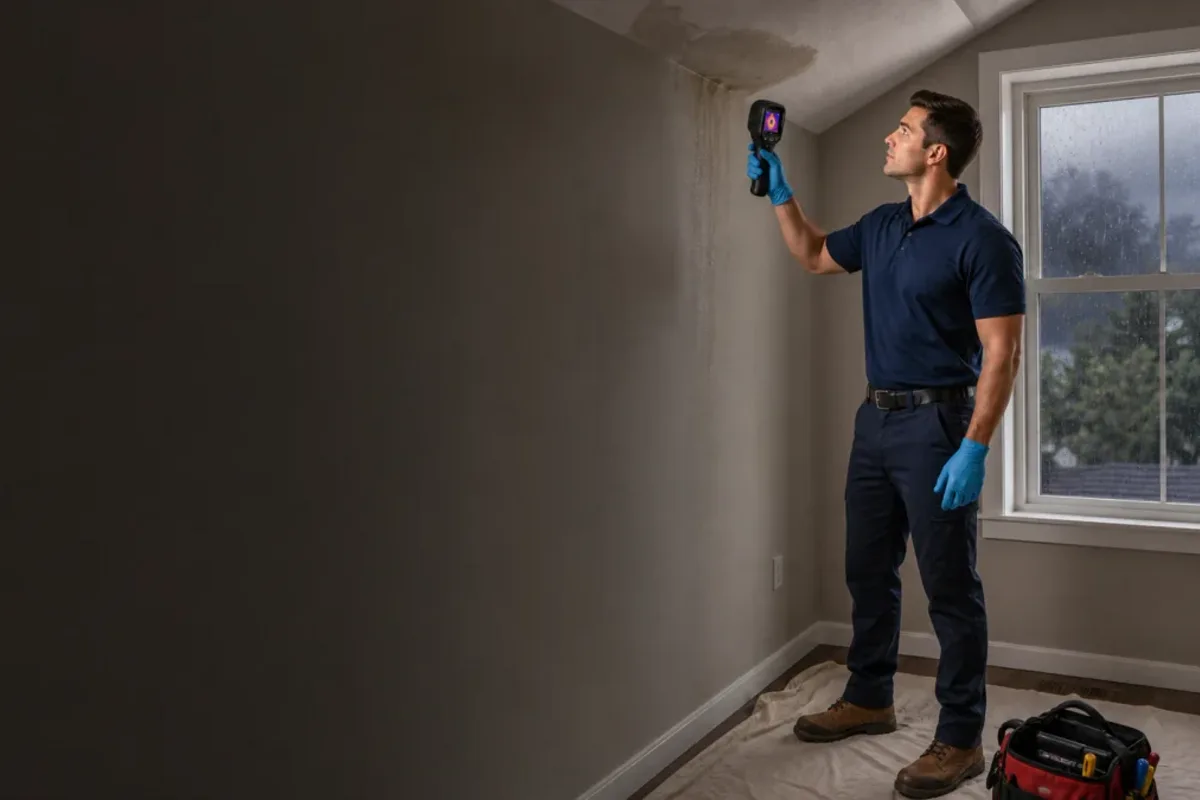 Before · Project 02
Paint bubbles or drywall feels soft. Moisture readings show how far the material is affected while thermal changes help identify the direction water may be moving.
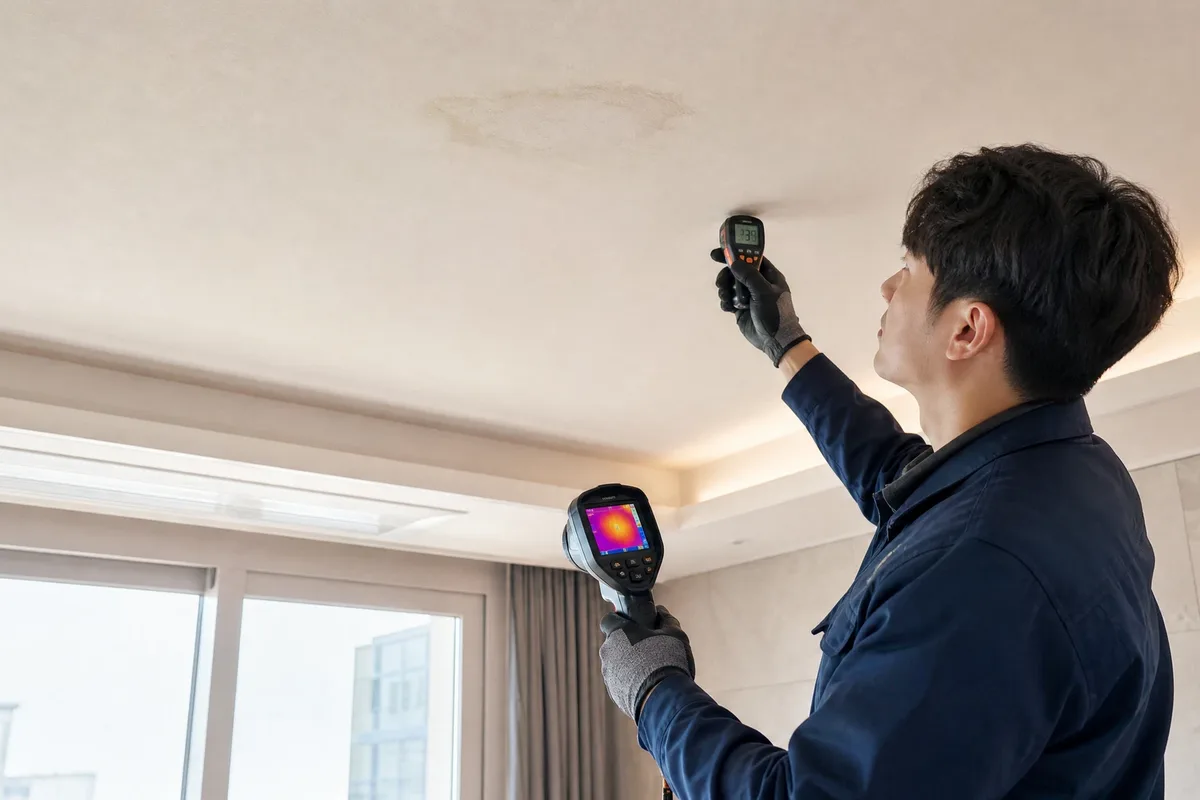 After · The source path is known
Moisture and heat readings pointed the same way, so the marked patch was small and the sound drywall stayed closed.
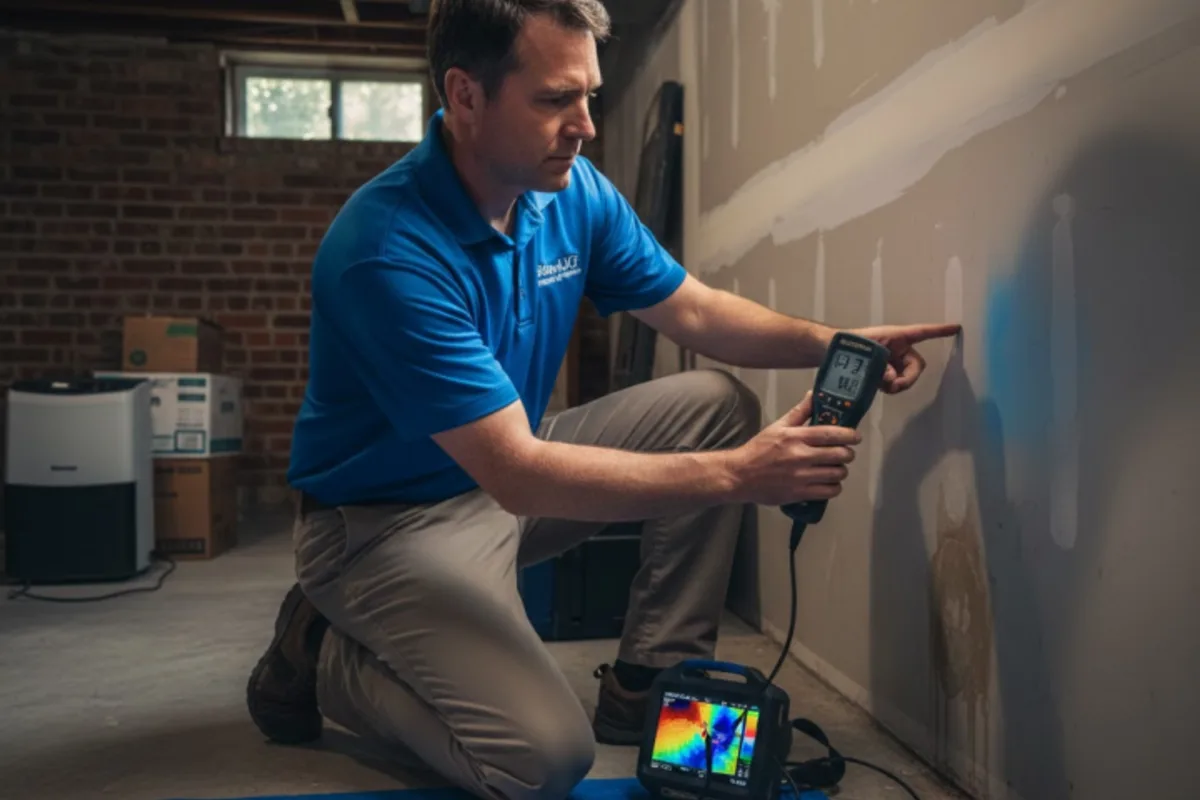 Before · Project 03
A musty smell stays inside one wall or room. We check accessible surfaces and adjacent spaces for hidden dampness rather than assuming the odor marks the exact source.
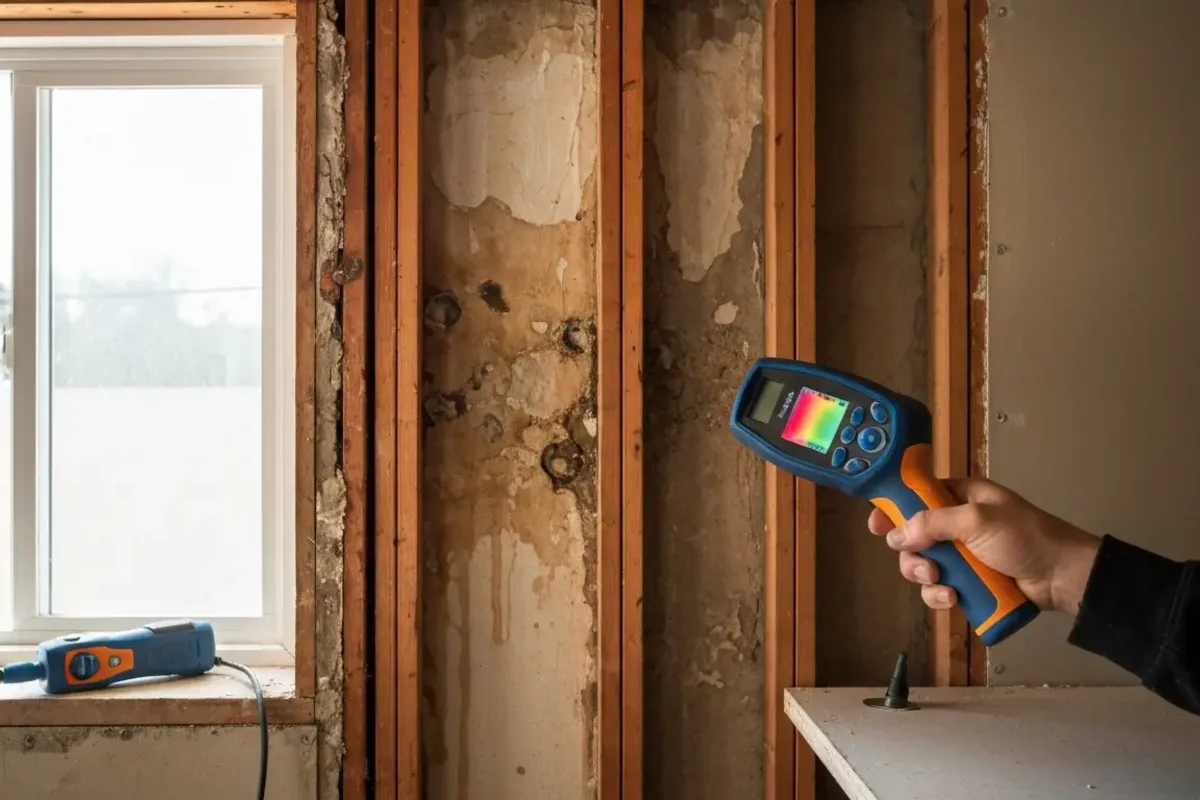 After · The source path is known
The smell traced back to one damp wall section, and the owner got that section named instead of a whole-room tear-out.
Ceiling and wall troubles
Stains, bubbles, and smells, taken one at a time.
A mark that grows after the same rain or the same bath is a clue with a pattern, and patterns can be traced. We tie each sign to a heat or moisture check, rule out old marks and plain damp air, and narrow the wall or ceiling area to open.
A ceiling mark that spreads after rain or a shower
Why it matters: A stain that grows after a clear trigger, rain or a shower, gives us a pattern we can test against.
A stain returns after the paint dries. We map its edge over time and compare nearby plumbing, roof exposure, and fixture use to identify which event makes it active.
What we trace next: Map the edge of the damp area. With the edge marked, we read just past the stain on all sides to see which way the damp is still spreading.
Bubbling paint or soft drywall
Why it matters: Drywall that bubbles or turns soft has been wet more than once, and the soft edge shows how far it spread.
Paint bubbles or drywall feels soft. Moisture readings show how far the material is affected while thermal changes help identify the direction water may be moving.
What we trace next: Compare rooms, fixtures, and pipe paths. We match those room-by-room readings against the pipe map, so a bath above is not blamed for a roof leak.
One room smells damp while the rest smell fine
Why it matters: A musty smell locked in one room often means damp material hidden inside that wall, feeding mold slowly.
A musty smell stays inside one wall or room. We check accessible surfaces and adjacent spaces for hidden dampness rather than assuming the odor marks the exact source.
What we trace next: Use thermal and moisture readings to trace direction. Heat pictures and meter reads are lined up together, and only the spot where both agree gets marked first.
Other leaks we can trace
Help for leaks beyond walls and ceilings.
This page focuses only on ceiling & wall leak tracing. If the trail leads to a system outside this page, the twelve services below show the other searches we run.
Ceiling & Wall Leak Tracing reviews
What customers say about stain tracing.
Every review below is written for ceiling & wall leak tracing. Each account here covers the stain or smell the owner found, the readings we used to trace it, and the single repair area they were left with.
Locations we serve
Ceiling & Wall Leak Tracing across Littleton-area communities.
Tracing visits run to homes, rentals, and businesses throughout our 21 Littleton-area neighborhoods. Choose your area for local detail, or tell us the property address when you call.
Water can follow framing, pipes, and drywall seams before it becomes visible.
It does not see through a wall. It shows surface temperature differences that can help identify where moisture may be moving.
Not always. Some leaks are intermittent and may reappear with rain, appliance use, or pressure changes.
Yes. A rain-tied pattern changes the suspect list toward roof edges, flashing, and exterior paths, and we compare that with the plumbing map before testing.
Old moisture leaves patterns in paint and drywall that still help. We map the full stained area and check the spaces above and beside it for the likely path.
Most ceiling stains start above the ceiling, not in it. The room, fixtures, and lines above give the strongest first clues.
Not at the start. Moisture and thermal readings usually narrow the area first. Any cut, if one is ever needed, comes after the readings and only where they point.
Yes. Wind-driven rain can enter around windows and siding and look like a pipe leak. We look at weather timing and exterior clues as part of the trace.
Littleton office
Local ceiling & wall leak tracing.
From our Littleton base, the tracing crew can reach homes and rentals across the area without long waits between visits. Call ahead, please, so the visit stays fixed on the stain at your property.
2260 W Chenango Ave #400, Littleton, CO 80120DirectionsWant that stain traced back to its start?
Call Littleton Leak Solutions and describe the mark or smell you noticed first. We will help you settle on a safe, focused way to trace it.
Call (720) 715-9731