
Affordable irrigation & sprinkler leak detection
Affordable Irrigation Leak Detection in Littleton, CO
A green stripe, soft patch, or rising bill can point below the lawn. Irrigation leak detection isolates zones and buried lines so soggy ground is not mistaken for normal watering. Buried irrigation lines can waste water between scheduled cycles and create soft ground, weak heads, or one unusually green strip. We isolate zones, valves, and line routes so the failed section can be repaired without chasing every wet patch.
About this service
A careful search built around irrigation & sprinkler leak detection.
Buried irrigation lines can waste water between scheduled cycles and create soft ground, weak heads, or one unusually green strip. We isolate zones, valves, and line routes so the failed section can be repaired without chasing every wet patch.
A soggy strip can sit yards from the split that feeds it, because water runs along the buried line before it rises. We note which days the patch stays wet, chart each zone and valve, and start with the mildest test that can single out one run.
Yard owners who want the bad section named before anyone digs up the lawn lean on this search. Expect plain talk, one stretch of line to open first, and a straight answer if more than one zone looks suspect.
Why yard systems need a close look
Zone by zone. No guesswork.
Out in the yard, our Littleton crew shuts off and tests one zone at a time for a clear reason, keeps turf and beds intact where we can, and explains each finding without jargon. You finish knowing what the pressure and soil signs support, and what to do after that.
We test one valve and one run at a time, so the result names a place, not the whole yard.
Listening and pressure checks come before any digging, so lawn and beds stay whole in most visits.
We explain the pressure drop, the wet soil it matches, and the stretch of line it points to.
Since 2018, Littleton-area lawns, beds, and sprinkler systems have been steady work for our crew.
Our yard method
From soggy patch to split line.
Each result decides the next move, so we never chase wet grass at random. The search stays tight, and the repair crew gets one clear run of pipe to open.
Review zone behavior and controller timing
Your watering schedule and the wet patch lead the way, so the first zone test has a clear reason behind it.
Isolate the line or valve group
Pressure results are compared zone by zone, and we follow only the run where the drop stays.
Trace the wet area and test the likely section
The failing stretch gets flagged in the turf, with plain notes on what the dig should uncover.
Sprinkler jobs, before and after
Three yard searches that ended with one clear dig spot.
Each irrigation & sprinkler leak detection project begins with a broad warning sign and ends with a smaller, evidence-led area for repair. Look at the three pairs below to see how a broad wet patch shrank to a single line worth opening.
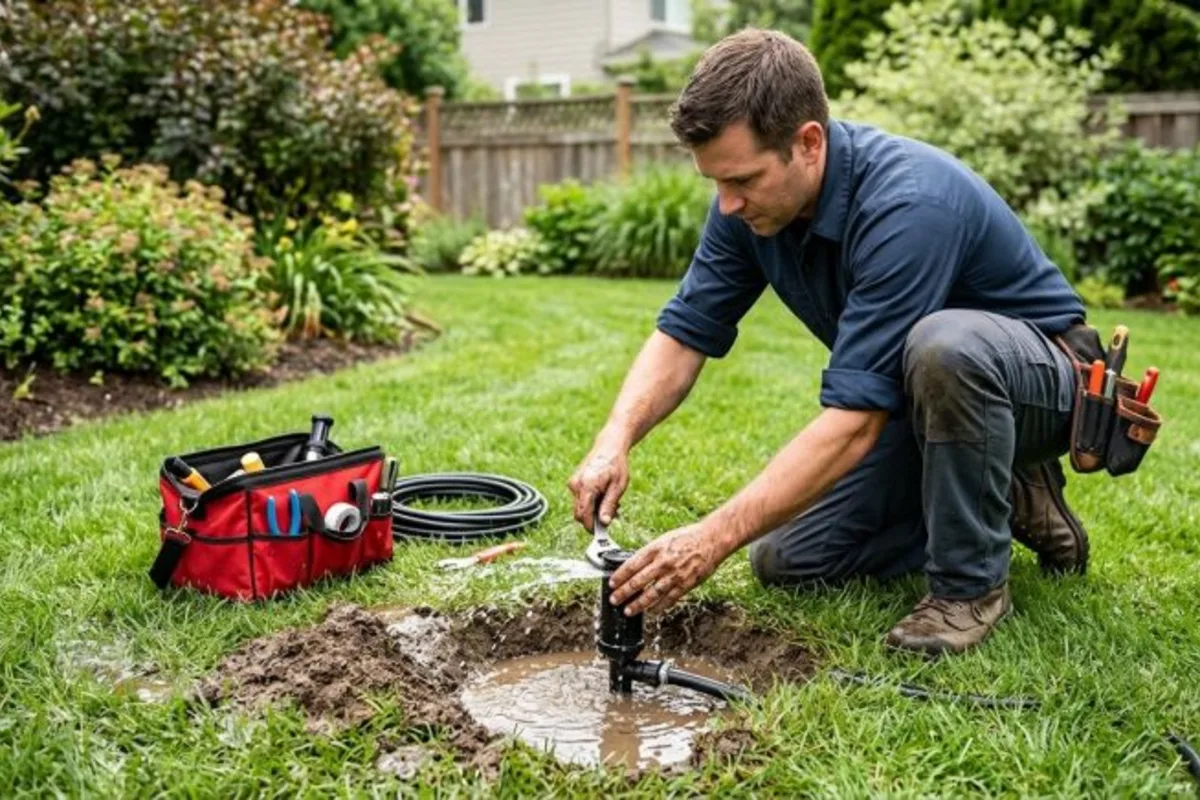 Before · Project 01
One strip of lawn stays wet between watering days. We compare controller timing, valve behavior, and the buried route to see whether the moisture follows a specific zone.
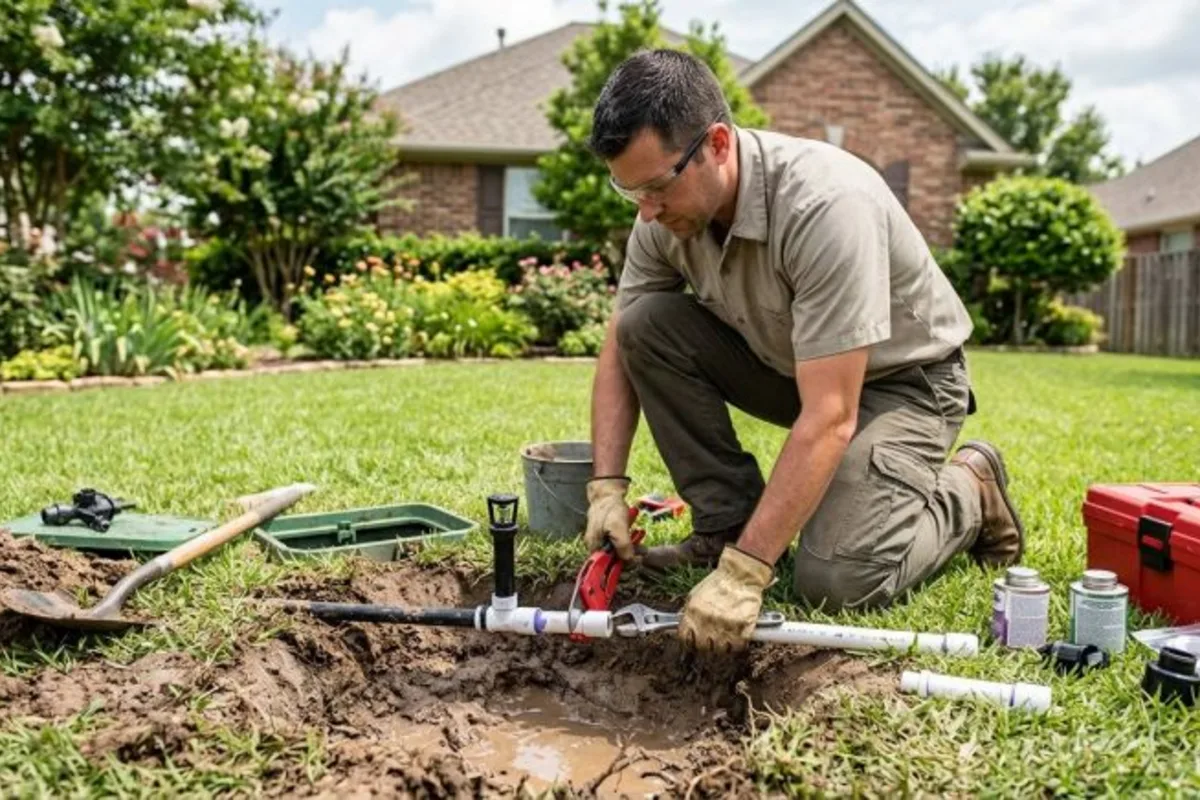 After · Know the leaking zone
The wet strip followed one zone’s schedule, and that match moved a single run to the front of the repair list.
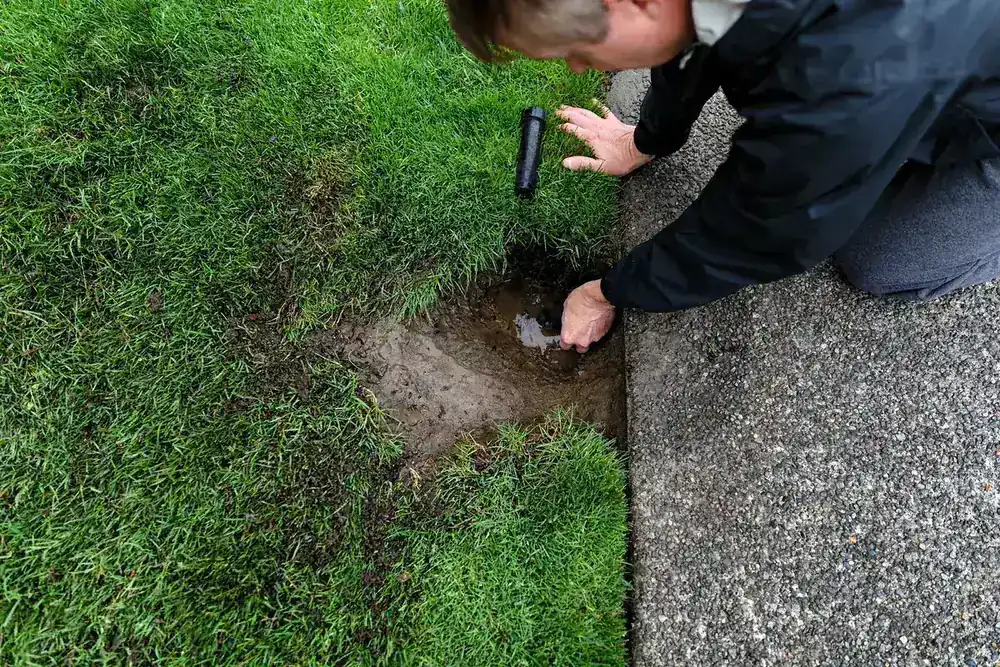 Before · Project 02
Sprinkler heads are weak or uneven in one area. Pressure and flow changes help separate a broken lateral line from clogged heads or a valve that is not opening fully.
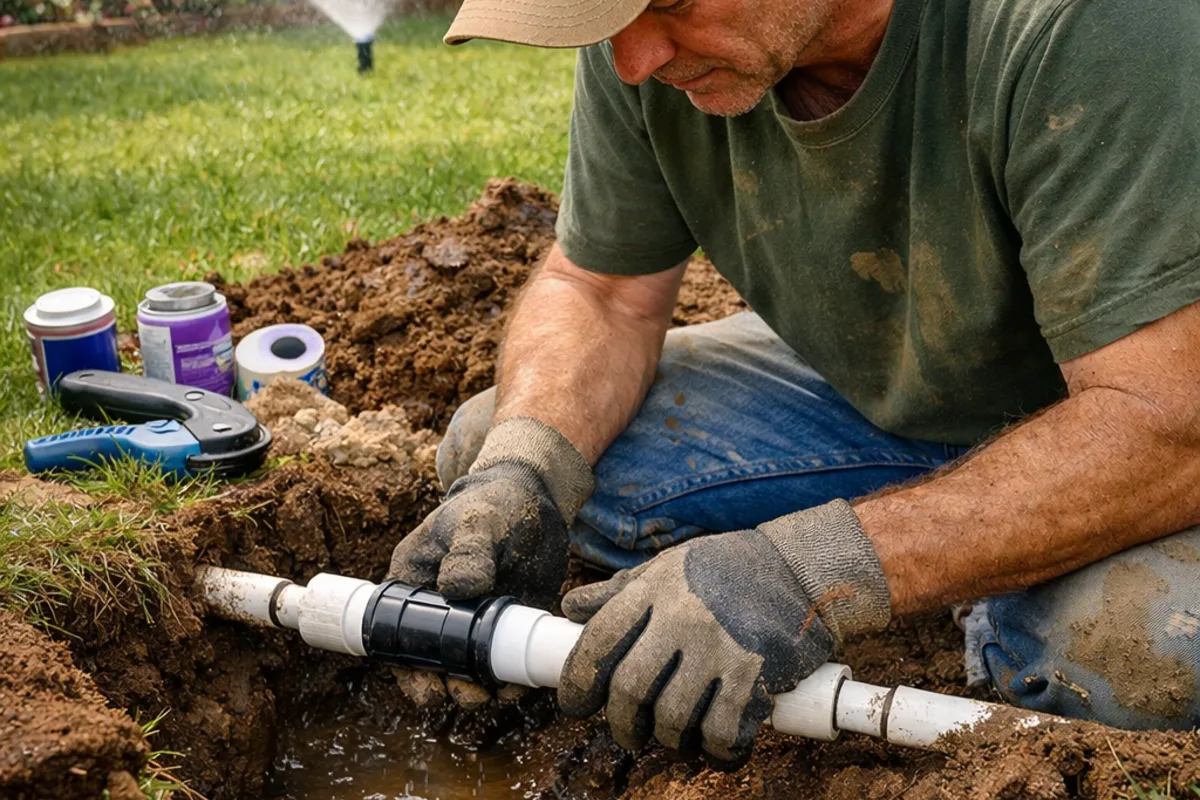 After · Know the leaking zone
Pressure readings split the problem from clogged heads, leaving one lateral line as the marked fix.
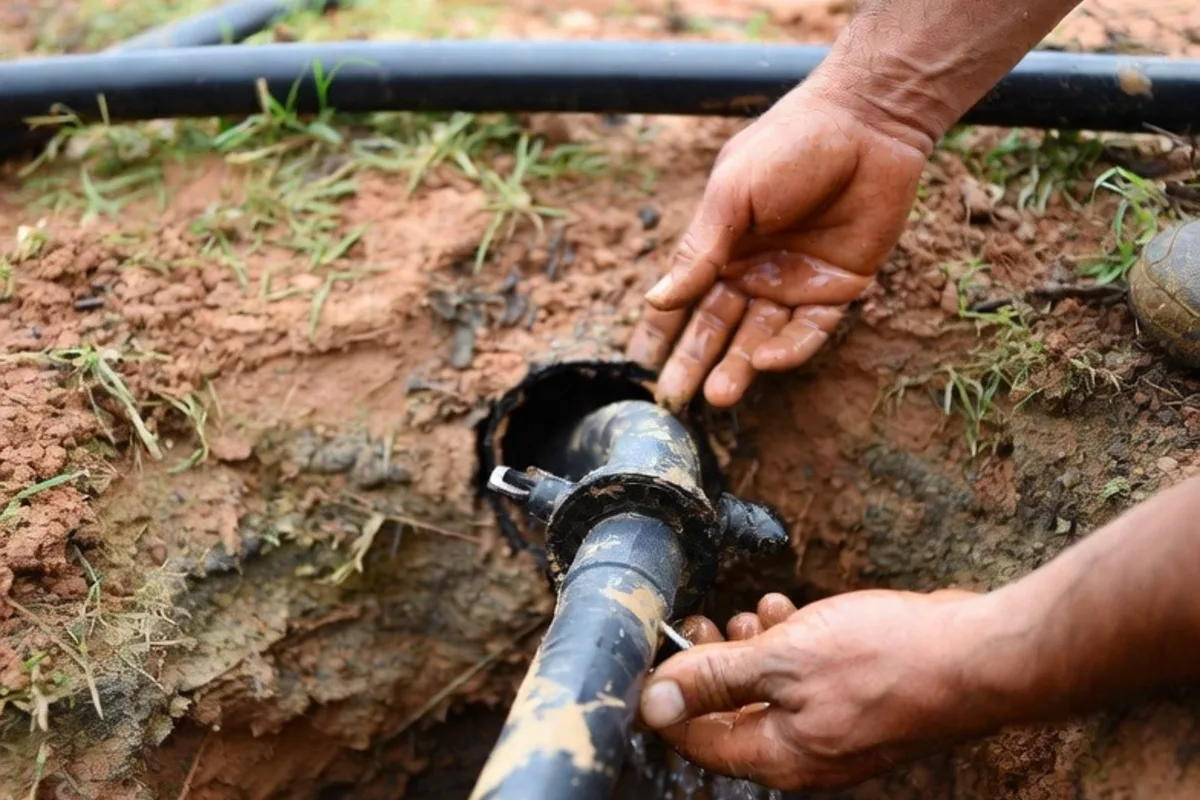 Before · Project 03
The meter changes during irrigation season without a clear reason. We isolate irrigation use from household use and test the zone or main feed that best matches the increase.
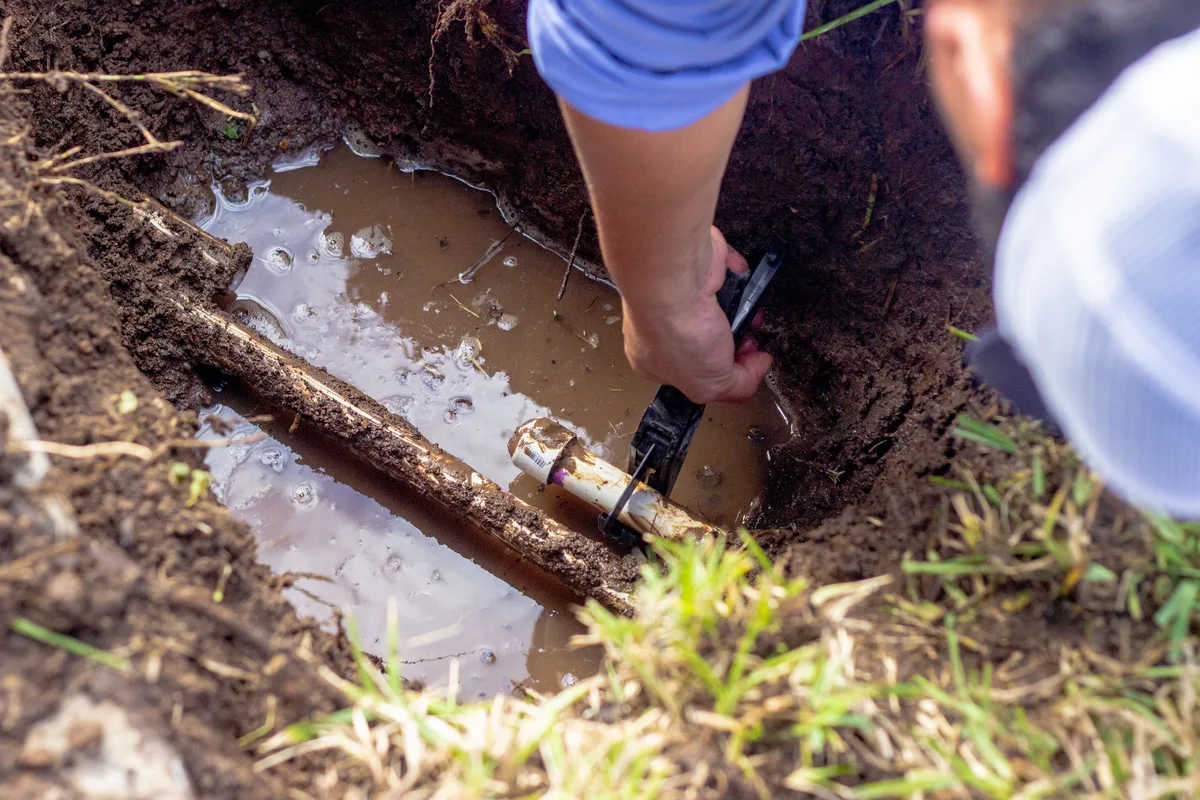 After · Know the leaking zone
Isolating the yard from the house supply proved the loss sat in one feed, and the owner knew which section to open.
Sprinkler trouble signs
What wet grass and weak heads really mean.
When a clue repeats on the same days and in the same zone, it tells us how that part of the system acts. We pair each clue with a zone or pressure check, rule out clogged heads and tired valves, and close in on the run that needs repair.
One area stays wet between watering days
Why it matters: A patch that never dries between watering days is often fed by a line that leaks every time the zone runs.
One strip of lawn stays wet between watering days. We compare controller timing, valve behavior, and the buried route to see whether the moisture follows a specific zone.
What we test in the yard next: Review zone behavior and controller timing. If the wet days line up with one zone schedule, that run moves to the front of the line.
Weak, uneven spray pressure in one zone
Why it matters: Heads that spray weakly in one zone can mean water is escaping the line before it ever reaches them.
Sprinkler heads are weak or uneven in one area. Pressure and flow changes help separate a broken lateral line from clogged heads or a valve that is not opening fully.
What we test in the yard next: Isolate the line or valve group. Shutting the rest down shows if the weak pressure stays with this group or clears.
Summer bills climb once watering season starts
Why it matters: A bill that climbs only in watering season points at the yard system rather than the house plumbing.
The meter changes during irrigation season without a clear reason. We isolate irrigation use from household use and test the zone or main feed that best matches the increase.
What we test in the yard next: Trace the wet area and test the likely section. A pressure hold on that single stretch then proves the leak sits there before any turf is lifted.
Other systems we check
Help for leaks beyond the lawn.
This page focuses only on irrigation & sprinkler leak detection. Should the loss trace back indoors or under concrete instead, the twelve services below cover the rest of the property.
Irrigation & Sprinkler Leak Detection reviews
What yard customers say.
Every review below is written for irrigation & sprinkler leak detection. Yard owners below describe the wet patch or weak zone they saw first, the zone tests that followed, and the one run of line they were told to repair.
Locations we serve
Irrigation & Sprinkler Leak Detection across Littleton-area communities.
Sprinkler searches take us to front yards, back gardens, rentals, and shop grounds across the towns around Littleton. Pick your area page for local notes, or ring us and share the property address to book the right visit.
Watch for soggy strips, hissing near valves, weak heads, or a meter change when an irrigation zone is active.
Yes. A valve can seep, stay partly open, or fail to seal.
If water is pooling or a zone will not stop, shut off that system when you can do so safely.
A zone-only problem often sits in that zone valve, a lateral line, or broken heads on that run. We isolate the zone and test it on its own.
Yes. A valve that does not seal can seep all day, keeping one area wet between watering cycles. Meter checks with the controller off can confirm it.
We follow the wettest soil, listen along the line route, and isolate sections. Digging is left for the small area the evidence supports.
If water is pooling or a zone will not stop, shut that zone or the system off. Otherwise leave settings as they are and tell us the watering schedule.
Steady water near the house can soften soil and affect nearby concrete over time. A soggy strip near the foundation deserves a prompt check.
Littleton office
Local irrigation & sprinkler leak detection.
Our Littleton shop keeps yard crews near the lawns, rentals, and shop grounds we test each week. Ring ahead instead of dropping in, and we will spend our time on the wet zone at your place.
2260 W Chenango Ave #400, Littleton, CO 80120DirectionsReady to find which line is leaking?
Call Littleton Leak Solutions and tell us which patch of lawn never dries out. Together we will pick a calm first test for that zone.
Call (720) 715-9731