
Trusted basement & crawlspace leak detection
Trusted Basement & Crawlspace Leak Detection in Littleton, CO
Low spaces hide slow leaks until odor, dampness, or damage moves upstairs. Basement and crawlspace leak detection separates plumbing leaks from drainage and moisture-entry problems. Basements and crawlspaces can collect plumbing leaks, drainage water, condensation, and ground moisture in the same area. We compare timing, location, weather, pipe routes, and material readings to separate those causes.
About this service
A careful search built around basement & crawlspace leak detection.
Basements and crawlspaces can collect plumbing leaks, drainage water, condensation, and ground moisture in the same area. We compare timing, location, weather, pipe routes, and material readings to separate those causes.
Water can travel along joists and soil before it shows, so a stain in the corner may start well away from that spot. We note when the dampness grows, trace the pipes overhead and nearby, and start with the gentlest check that can rule a cause in or out.
Homeowners who want the true cause named before any floor or wall is opened use this service most. You will hear plain words, a tight area to open first, and a clear note if the signs point to two causes at once.
Why lower levels need a dry plan
Proof before digging, down below.
Down in a basement or crawlspace, our Littleton crew tests for a clear reason, guards floors and stored items where we can, and walks you through each reading in plain words. By the end, you will know what the readings support and which move makes sense after that.
We choose the check that suits damp soil, wet framing, or a suspect pipe, rather than running them all.
Checks that do not cut or break come first, so finished rooms stay as they are whenever we can help it.
We show you what each meter reading means, where it points, and what it means for the repair.
Littleton-area basements and crawlspaces have been a core part of our work since 2018.
How a basement search runs
From first damp clue to marked source.
We work step by step, so each reading tells us where to look next. That steady order keeps digging small and hands the repair crew a clear place to open.
Check when and where moisture appears
We start with your damp clue and the pipes above it, so the first moisture check has a clear target.
Inspect plumbing and likely entry paths
Readings are set side by side, and we only move toward the spots where dampness grows stronger.
Use readings to separate active leaks from old dampness
The wettest true source zone gets marked, with notes your repair crew can act on right away.
Before and after, below grade
Three basement jobs, three clearer repairs.
Each basement & crawlspace leak detection project begins with a broad warning sign and ends with a smaller, evidence-led area for repair. The three pairs below trace how a vague damp worry turned into one marked spot to fix.
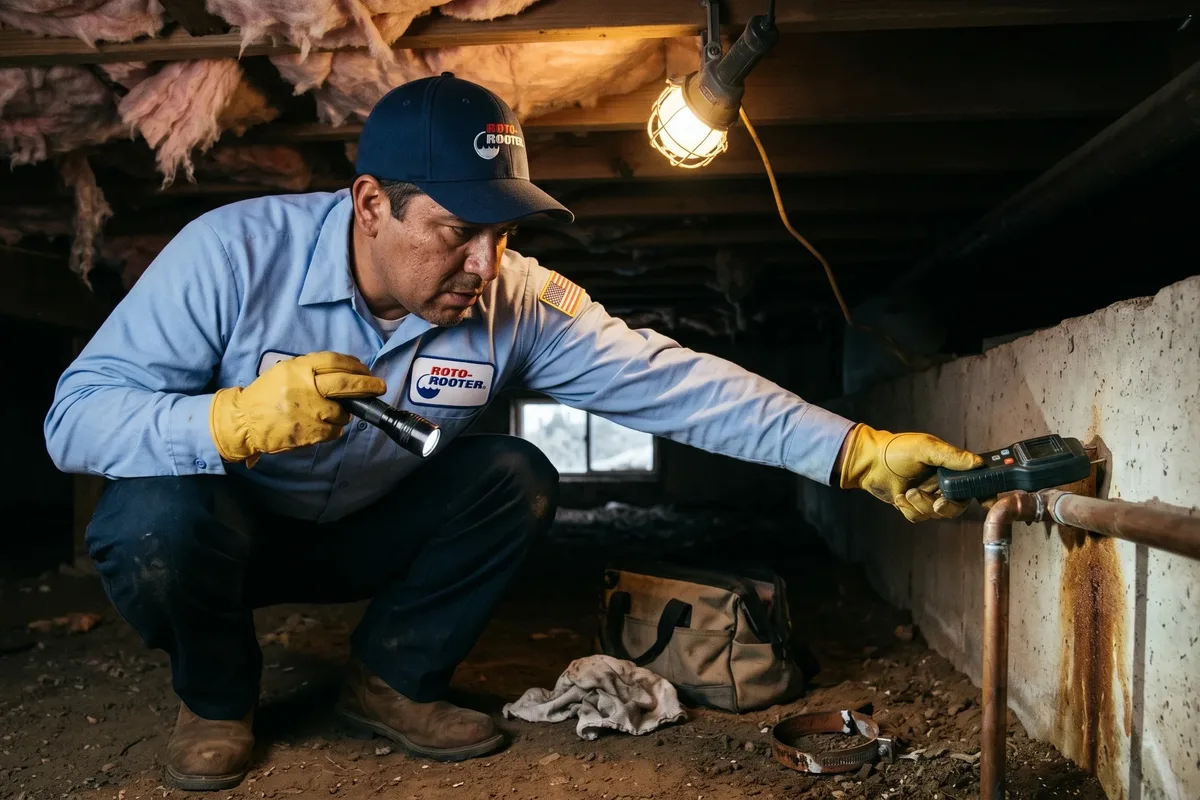 Before · Project 01
A damp smell returns after the space dries. We check whether moisture follows rain, plumbing use, or steady meter movement and map where readings are highest.
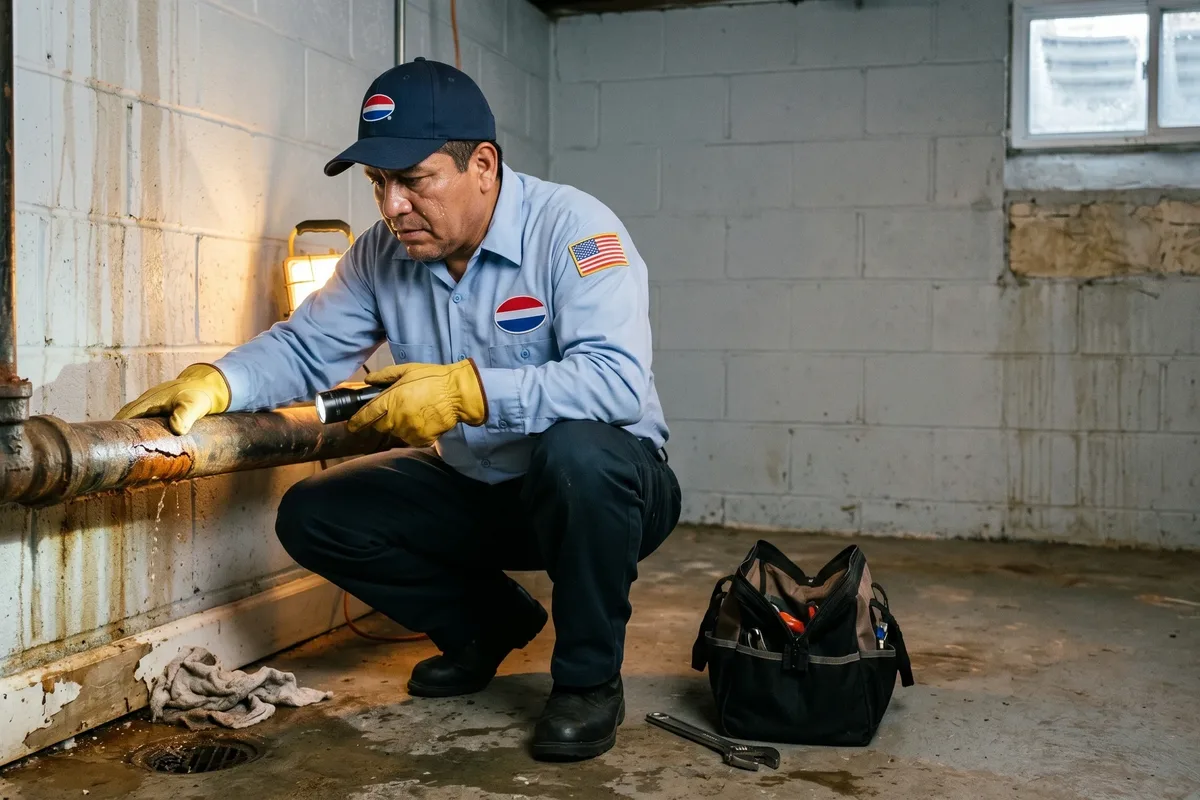 After · A dry plan forward
Timing the dampness against rain and water use showed a plumbing cause, and the highest readings marked the start.
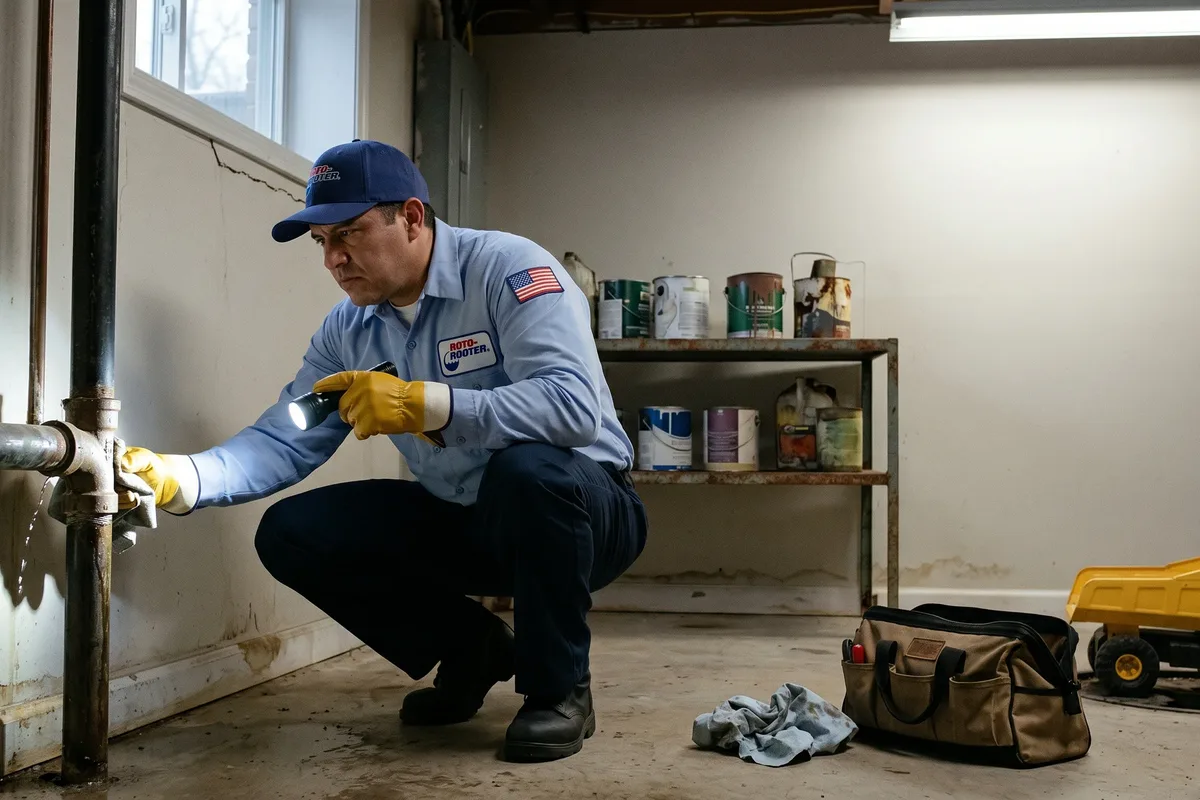 Before · Project 02
Insulation or framing is wet below a bathroom or kitchen. The rooms above and nearby pipe routes are tested so the source is not confused with general crawlspace humidity.
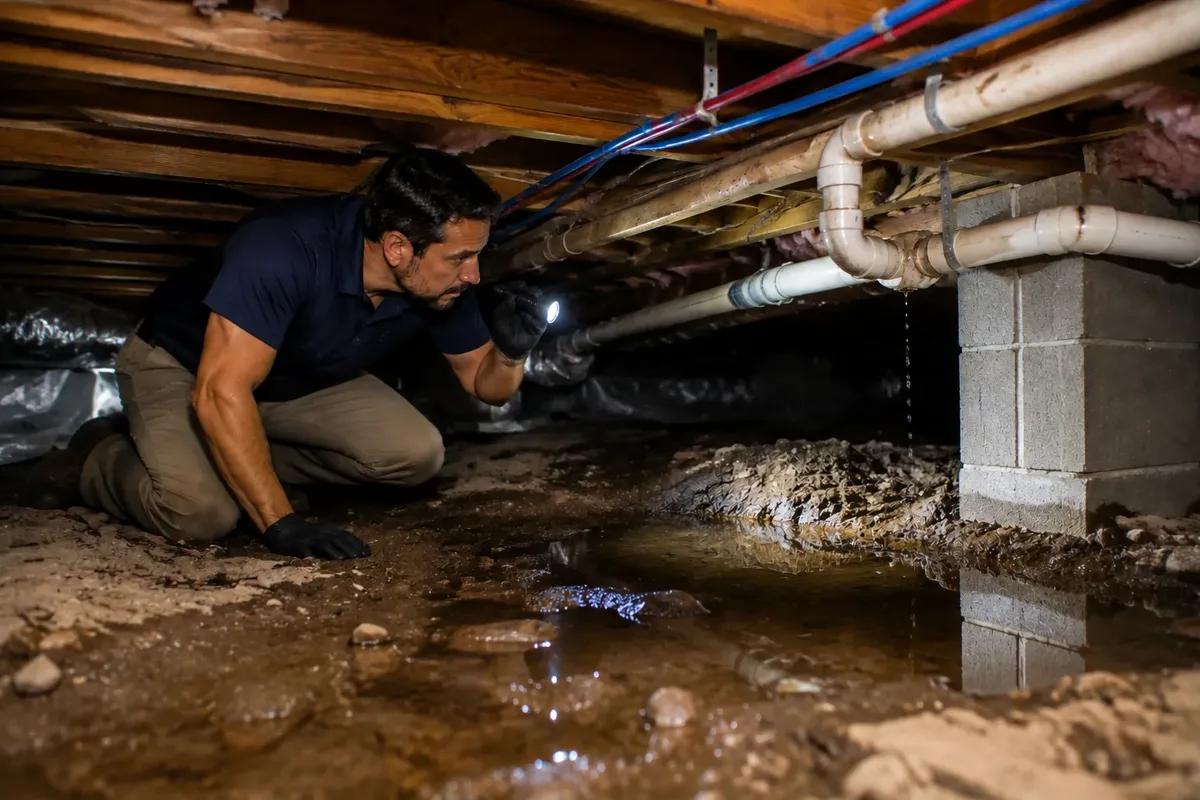 After · A dry plan forward
Testing the rooms above separated a pipe leak from plain crawlspace humidity, so the repair aimed at one line.
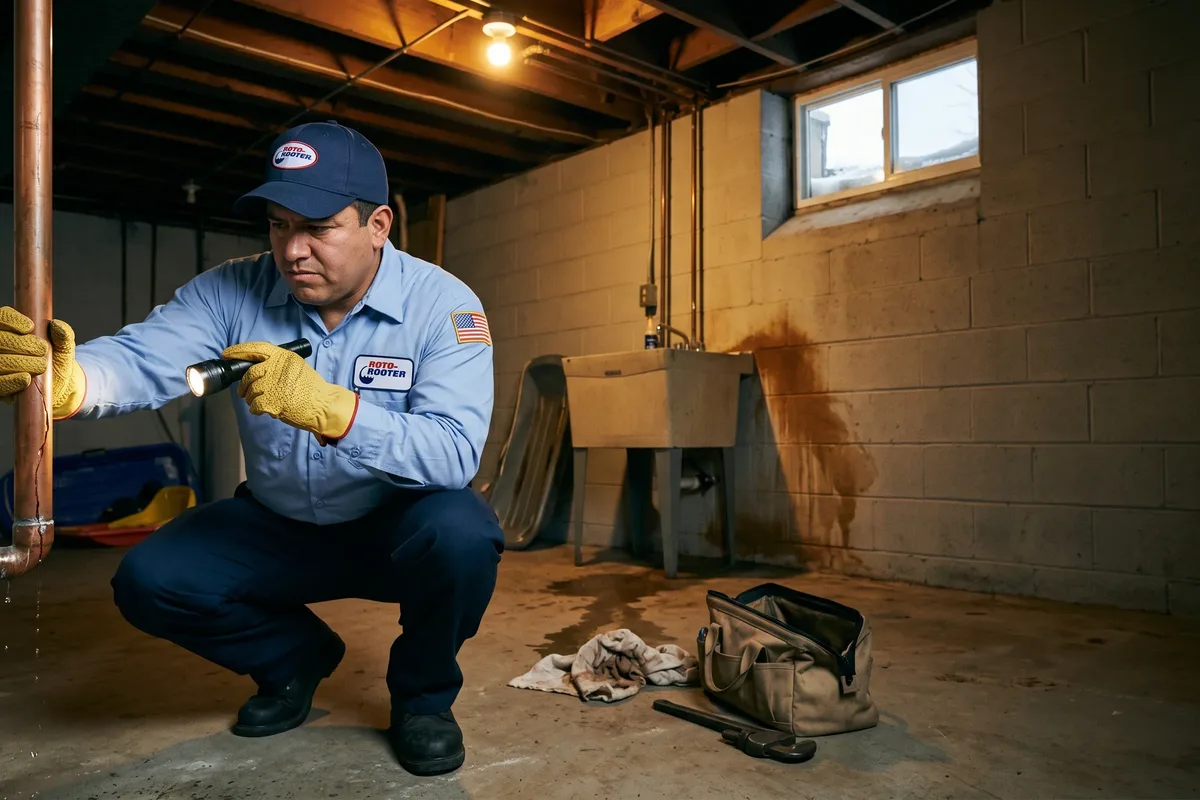 Before · Project 03
Water appears near a foundation wall. We compare plumbing lines, exterior drainage, and weather timing before recommending a repair direction.
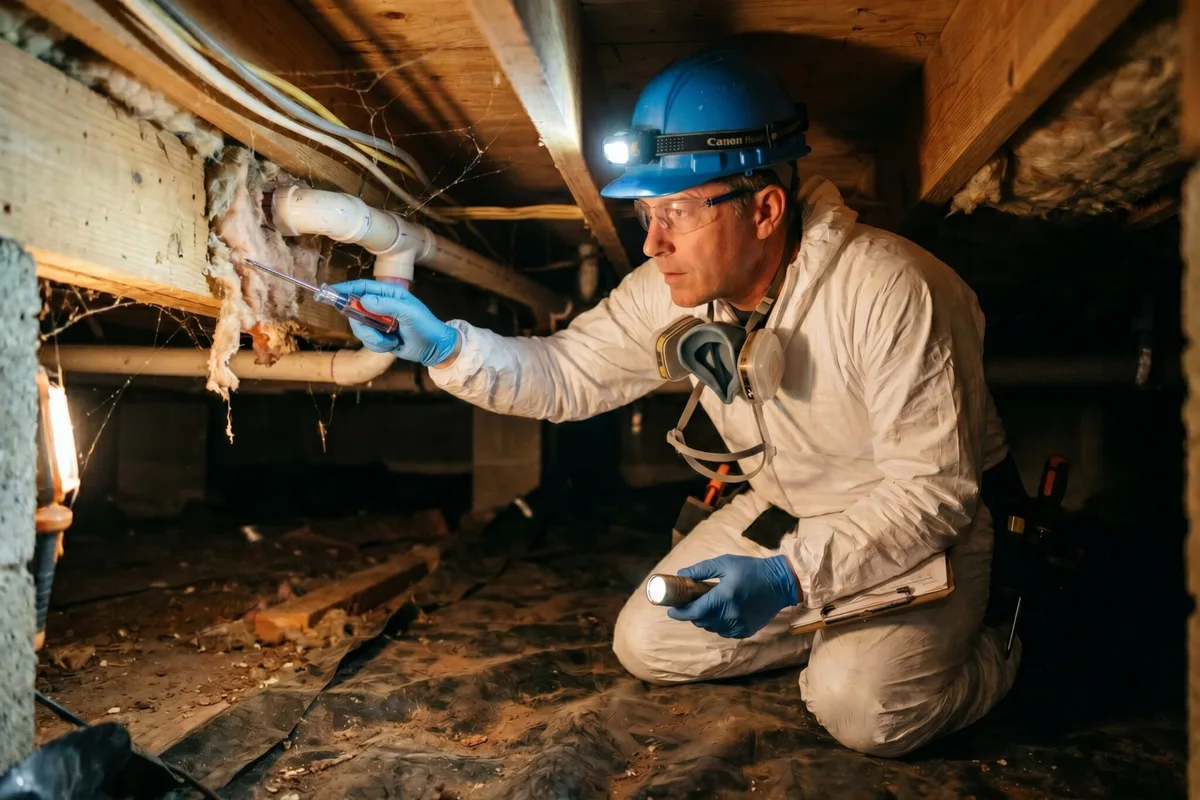 After · A dry plan forward
With weather ruled out, the owner got a named pipe run to fix and drainage notes for the wall that stayed dry.
Basement and crawlspace issues
Low-space warning signs, in full.
A clue that keeps coming back tells us if the dampness tracks rain, water use, or a steady leak. We match each clue to a moisture or timing check, set aside causes that only look alike, and shrink the zone that needs work.
A musty odor that comes back days after drying out
Why it matters: A smell that returns after the space dries out means new moisture is arriving, not just old dampness lingering.
A damp smell returns after the space dries. We check whether moisture follows rain, plumbing use, or steady meter movement and map where readings are highest.
What we check down below next: Check when and where moisture appears. Then we set that timing beside rain records and water use to say which cause fits best.
Insulation that stays wet and framing turning dark
Why it matters: Wet insulation and dark wood usually sit below the real source, and they show how long water has been traveling.
Insulation or framing is wet below a bathroom or kitchen. The rooms above and nearby pipe routes are tested so the source is not confused with general crawlspace humidity.
What we check down below next: Inspect plumbing and likely entry paths. Next we follow the wettest wood upward to the pipe or entry point it leads to.
Moisture near a foundation wall or pipe run
Why it matters: Water at a foundation wall can come from a pipe or from outside drainage, and the two fixes are very different.
Water appears near a foundation wall. We compare plumbing lines, exterior drainage, and weather timing before recommending a repair direction.
What we check down below next: Use readings to separate active leaks from old dampness. Fresh readings against dry spots nearby then show if water is still moving or long gone.
More ways the crew can help
Twelve more searches, if the signs lead elsewhere.
This page focuses only on basement & crawlspace leak detection. If the dampness traces back to a pipe, slab, or yard line instead, the twelve services below cover those systems.
Basement & Crawlspace Leak Detection reviews
What basement customers say.
Every review below is written for basement & crawlspace leak detection. In each one, a homeowner shares the damp clue they saw first, how the readings narrowed it down, and the repair step they were handed.
Locations we serve
Basement & Crawlspace Leak Detection across Littleton-area communities.
Basement and crawlspace checks run in houses, rental homes, and workplaces all across the area we cover. Open your area page for nearby detail, or ring us with the street address so we can plan the visit.
No. Ground moisture, drainage, condensation, and plumbing can create similar signs.
Ongoing moisture can affect insulation, wood, fasteners, and indoor air, so repeat dampness deserves attention.
Clear safe access to the entry and keep stored items away from the wet area when possible.
Timing is the key clue. A pipe leak follows water use or steady meter movement. Groundwater follows rain and soil conditions. We compare both patterns.
Yes. Moisture readings across the space can find the dampest materials even when nothing looks wet, and that map points to the next check.
Leave the pattern as you found it if it is safe. Fresh moisture distribution is evidence, and drying first can blur where the water started.
Yes. Damp air and wet framing below a floor can feed odors and damage upstairs. Finding the source protects both spaces.
A safe path to the crawlspace entry and room to reach the wet area. Move stored items away from the damp zone if you can do it safely.
Littleton office
Local basement & crawlspace leak detection.
Being based right in Littleton puts our crew a short drive from basements and crawlspaces all over the area we serve. Please ring ahead rather than stop by, so we can spend the visit on the damp signs at your home.
2260 W Chenango Ave #400, Littleton, CO 80120DirectionsWant to know what is wetting your basement?
Ring Littleton Leak Solutions and tell us when the damp smell or wet spot first showed up. We will talk you through a calm, focused first move.
Call (720) 715-9731