
Our process
How Our Leak Detection Process Works
Finding a hidden leak should not feel like a gamble. Here is exactly how we work, from the moment you call to the moment you know where the leak is and what comes next.
Before we arrive
It starts with what you noticed.
You do not need the right words or a plumber’s vocabulary. A warm floor, a sound at night, a soft spot in the yard — plain clues like these tell us where to begin.
Owner Jake Morrison built this process over nine years of leak work in Littleton homes: listen first, test the simple things, and let the tools prove the spot before anyone opens a surface. Curious what homeowners say afterward? Read our reviews. You can also skim the questions homeowners ask while you wait for your visit day.
Step by step
Five steps. No guesswork.
Every visit follows the same calm order, whether the leak hides under a slab, behind a shower wall, or out in the yard.
You call and tell us the signs
Tell us what changed: the bill, the sound, the stain, the warm floor. We ask a few short questions, agree on a time, and tell you anything worth doing before we arrive — usually nothing more than knowing where your shutoff sits.
We check the easy things first
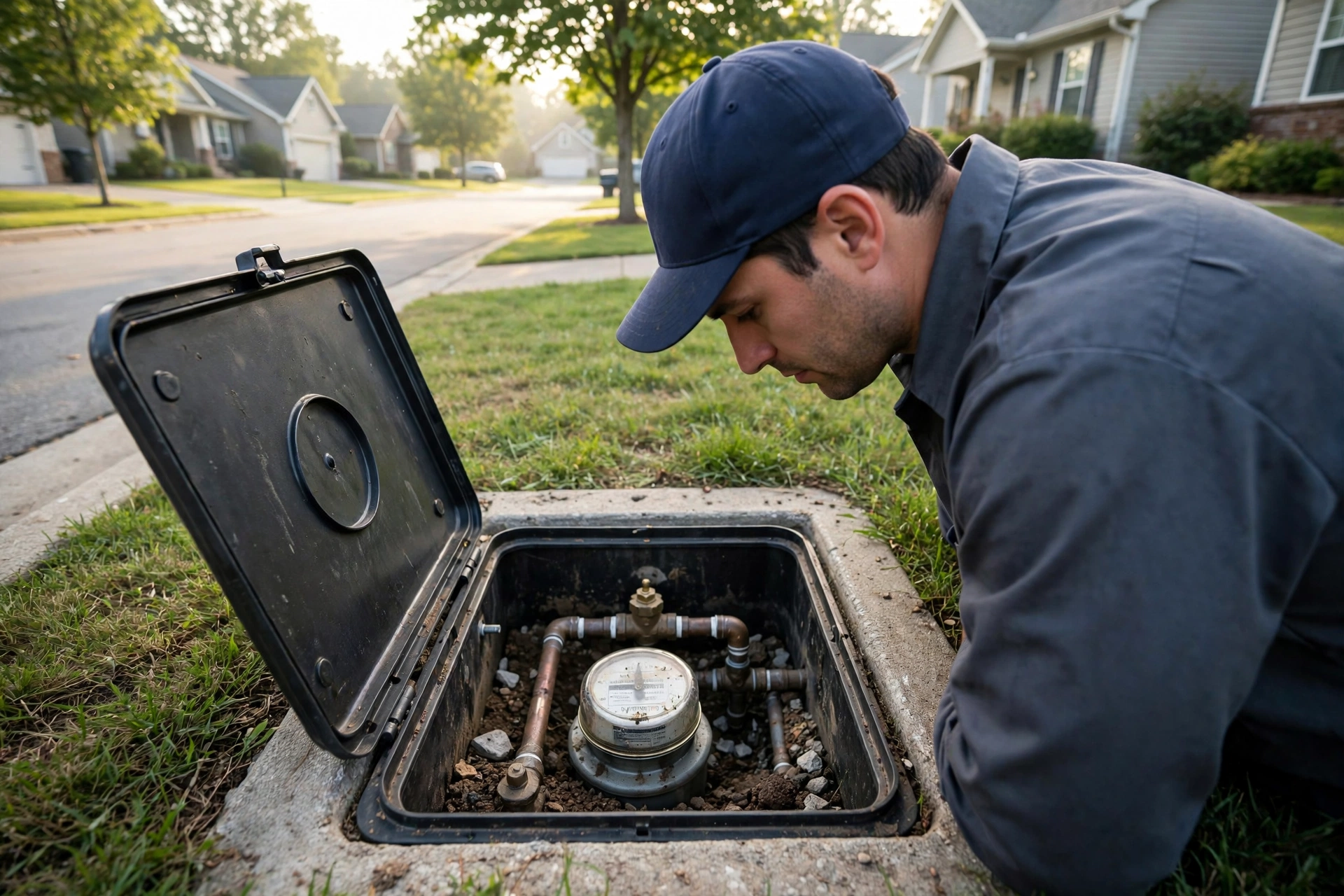
Many hidden leaks turn out to be a running toilet, a dripping valve, or a meter that tells the truth fast. We rule out the simple causes before any deep testing, so an easy problem gets an easy answer.
We pinpoint the leak with pro tools
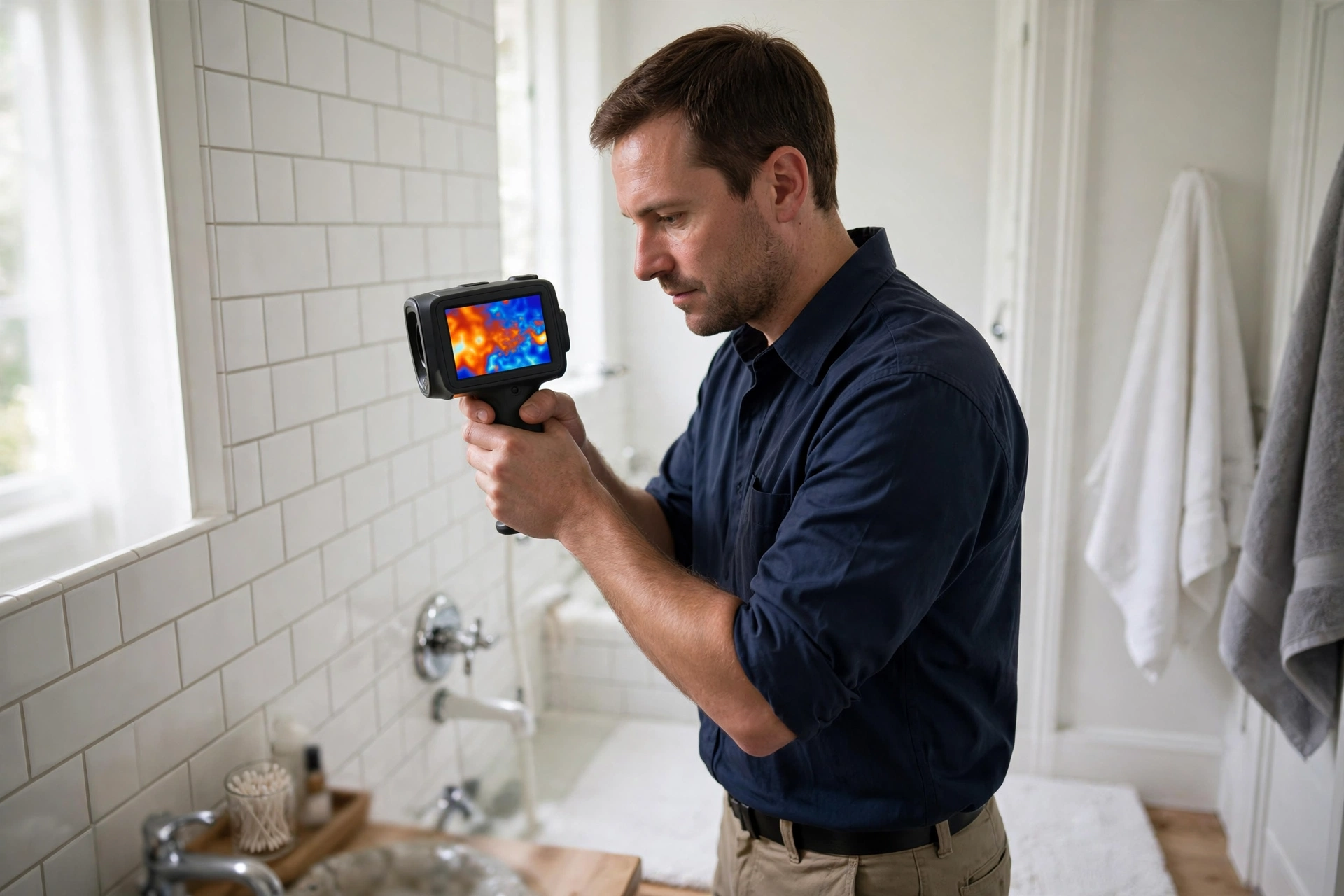
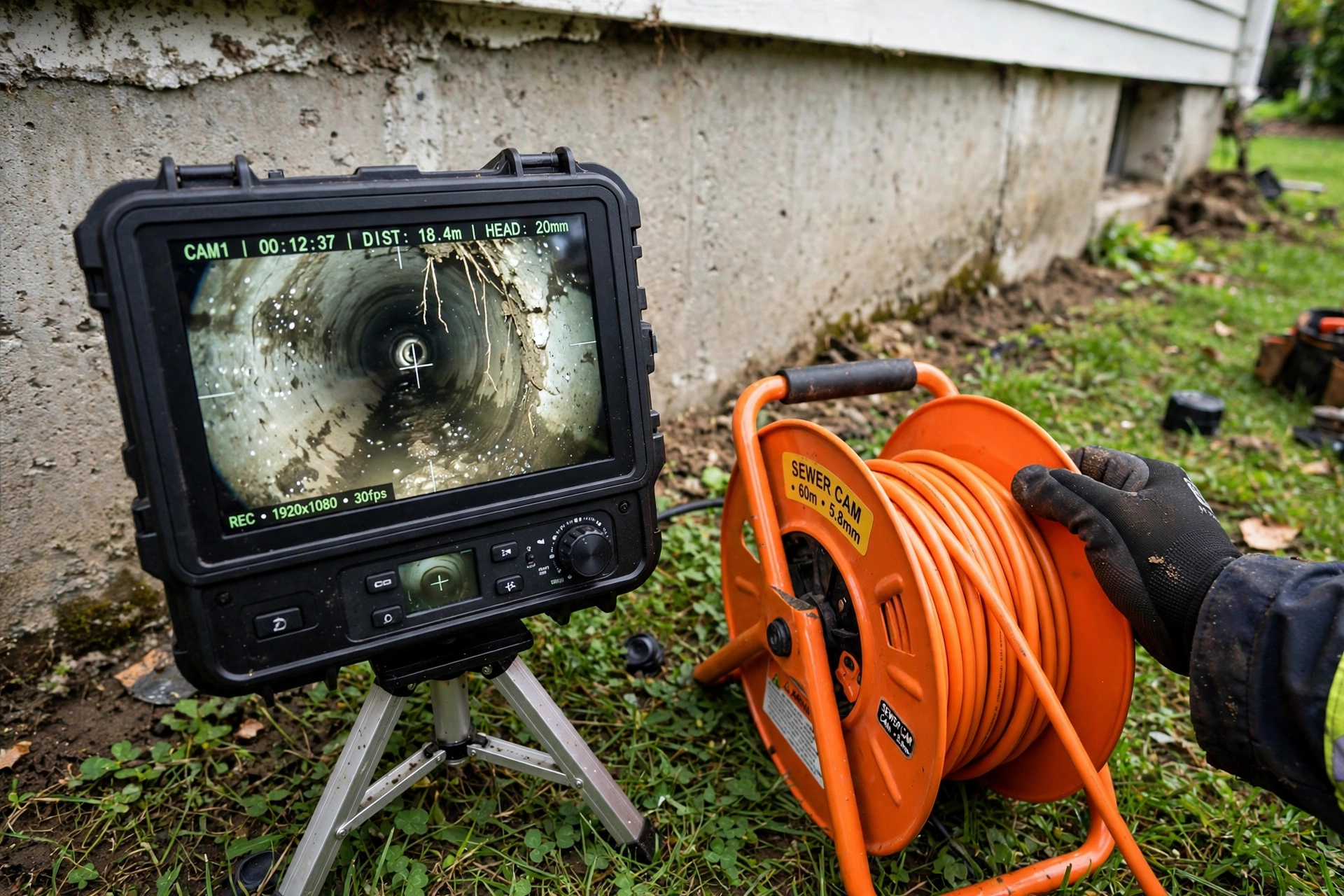
Listening tools follow the sound of escaping water. A thermal camera maps warm paths under floors. A sewer camera rides inside the line and shows cracks and roots on screen. No digging and no tearing walls open to hunt — the tools narrow the spot first.
We show you the exact spot
We mark the place, show you the readings or the camera view, and explain it in plain words: what is leaking, how we know, and how sure we are. You see the same proof we see. If two spots argue with each other, we test again until they agree.
You get a clear next step
You finish knowing where the repair should start and what kind of fix to expect. Your plumber can open one small, correct spot instead of searching — and we are glad to explain the findings to them directly.
Why the order matters
Skipping steps is how leaks get missed.
It can be tempting to jump straight to the loudest wall or the wettest corner. We do not, because water is a traveler. It runs along pipes, beams, and floor layers, then shows itself far from where it escaped. A visit that starts with the meter and the simple checks builds a map first — and a map is what keeps the final opening small.
Following the same order on every visit means nothing depends on luck. A new technician, a hard house, a leak that hides well — the steps still corner it, one honest test at a time. Slow is not the goal; sure is.
Homeowners tell us the order itself is calming. You always know what happens next, what we are testing, and why. No mystery steps and no sudden holes — just a search that keeps getting smaller until the leak has nowhere left to hide.
What we do not do
No guesswork. No needless damage.
Some habits make leak work messy and slow. We built our process to avoid every one of them:
Tools we trust
The right tool for each hiding place.
No single gadget finds every leak. We match the tool to the system — water line, drain, pool, or gas — and confirm one tool’s answer with another. These are the checks we lean on most:
Most homes take one to two hours. A quick fixture check can be faster; a buried yard line or a large home can take longer. We would rather finish with a sure answer than a fast guess.
No. Testing is non-invasive — listening, scanning, and camera work from the surface. If a tiny access point is ever needed to confirm a spot, we explain why first and keep it as small as the job allows.
Yes. We only ask for a fairly quiet house during listening tests, because the tools hear faint sounds. A sleeping pet is fine; a barking dog beside the microphone is a challenge we can work around together.
Then we tell you plainly what we ruled out and what the signs still suggest. Sometimes water must run longer, or one more test on another day settles it. You will never get a made-up answer just to close the visit.
Always. Before we pack up, we walk you through the spot, the proof, and the next step in plain words. Questions are welcome — the visit is not done until the problem makes sense to you.
Outdoor lines follow the same process. We test the buried run from above ground, mark where the evidence points, and only then should anyone dig — in one place, not across the whole yard.
Because water travels. The wettest patch often sits feet away from the break, so opening first usually means opening twice. Testing first turns one repair opening into the only opening.
Ready when you are.
One call starts the process. Tell us the sign you noticed, and we will take it from there — one clear step at a time, from the first ring to the final marked spot.
Call (720) 715-9731