Expert sewer line camera inspection
Expert Sewer Camera Inspection in Littleton, CO
When a drain problem keeps returning, the answer may be farther down the line. A sewer camera inspection gives a direct look inside an accessible line for cracks, roots, offsets, buildup, and blocked flow. Recurring backups and several slow drains often need a direct look inside the accessible sewer line. A camera can show roots, cracks, offsets, buildup, standing water, and blockages while recording the distance to a visible problem.
About this service
A careful search built around sewer line camera inspection.
Recurring backups and several slow drains often need a direct look inside the accessible sewer line. A camera can show roots, cracks, offsets, buildup, standing water, and blockages while recording the distance to a visible problem.
A backup shows up at the lowest drain in the house, but the roots or crack that cause it may sit forty feet out toward the street, so the wettest room is rarely where the problem lives. We note which drains act up and when, map the line path from the house, and pick the cleanout that gives the camera the clearest run.
This service fits owners who want to see the inside of their sewer line before they agree to any digging or repair. You get plain words, a distance reading for each defect, and a straight note when part of the line stays out of camera reach.
Why a camera check beats guessing
See it. Then decide.
Our Littleton camera team picks each access point on purpose, keeps floors and yards clean while we work, and talks you through the screen in plain words. When we finish, you know which defects the camera proved and which questions still need a plumber’s eye.
The camera goes first, so roots, cracks, and low spots are seen, not guessed from a slow drain.
The camera enters through a cleanout you already have, so no digging happens just to look.
Each defect comes with a footage count, so a repair crew knows where to dig and where not to.
Sewer lines in Littleton-area homes and shops have been part of our daily work since 2018.
Inside the line, step by step
From slow drains to what the camera sees.
The camera moves through the line in stages, and what we see at each stage shapes the next move. Nothing is guessed, so the repair plan rests on real pictures and real distances.
Choose a safe camera access point
We start with the drain pattern and the line path, so the camera enters at the cleanout with the clearest run.
Record the line condition and distance
The camera view is checked as it moves, and we only push deeper where the picture shows a defect.
Explain visible defects and next repair questions
Each defect gets a distance mark, and we tell you what questions the repair crew should answer first.
Three sewer jobs, before and after
Three sewer problems, seen clearly before any digging.
Each sewer line camera inspection project begins with a broad warning sign and ends with a smaller, evidence-led area for repair. These pairs show a vague drain worry turning into a clear picture of one spot in the line.
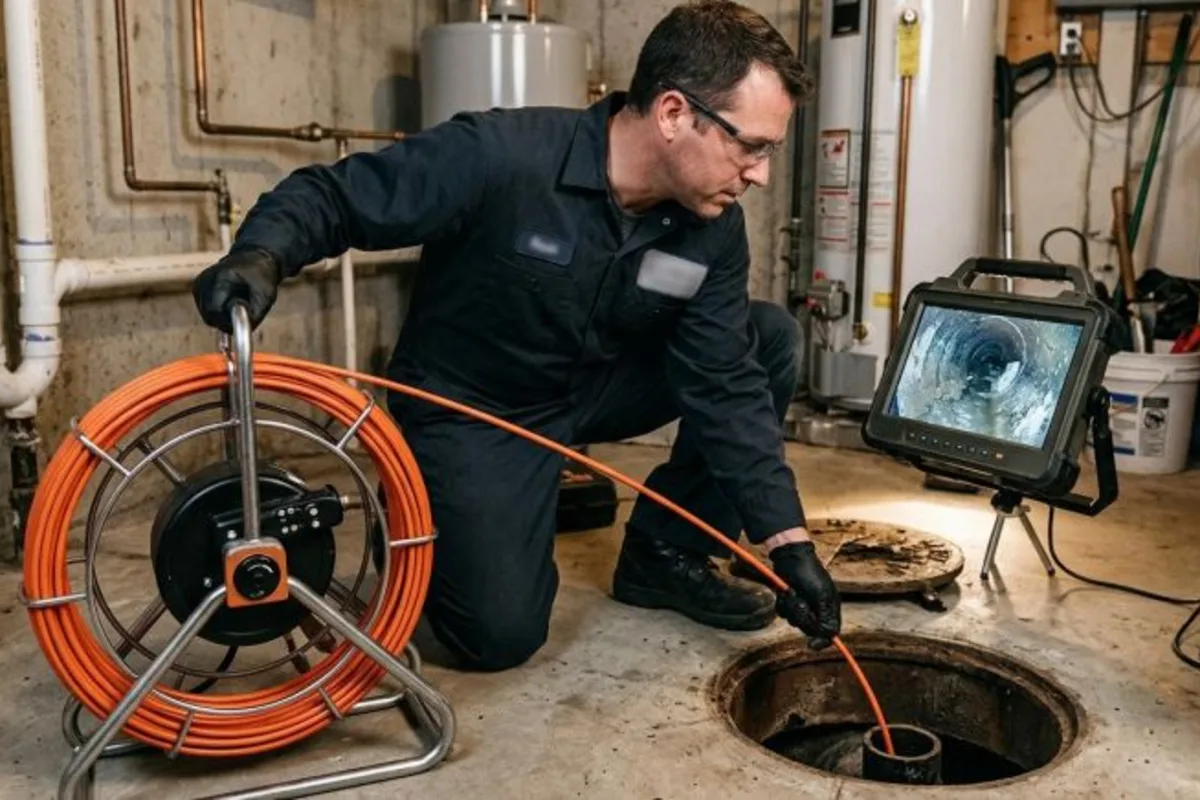 Before · Project 01
Several drains slow or gurgle at the same time. We select an accessible entry point and inspect the shared line for blockage, standing water, or a change in pipe condition.
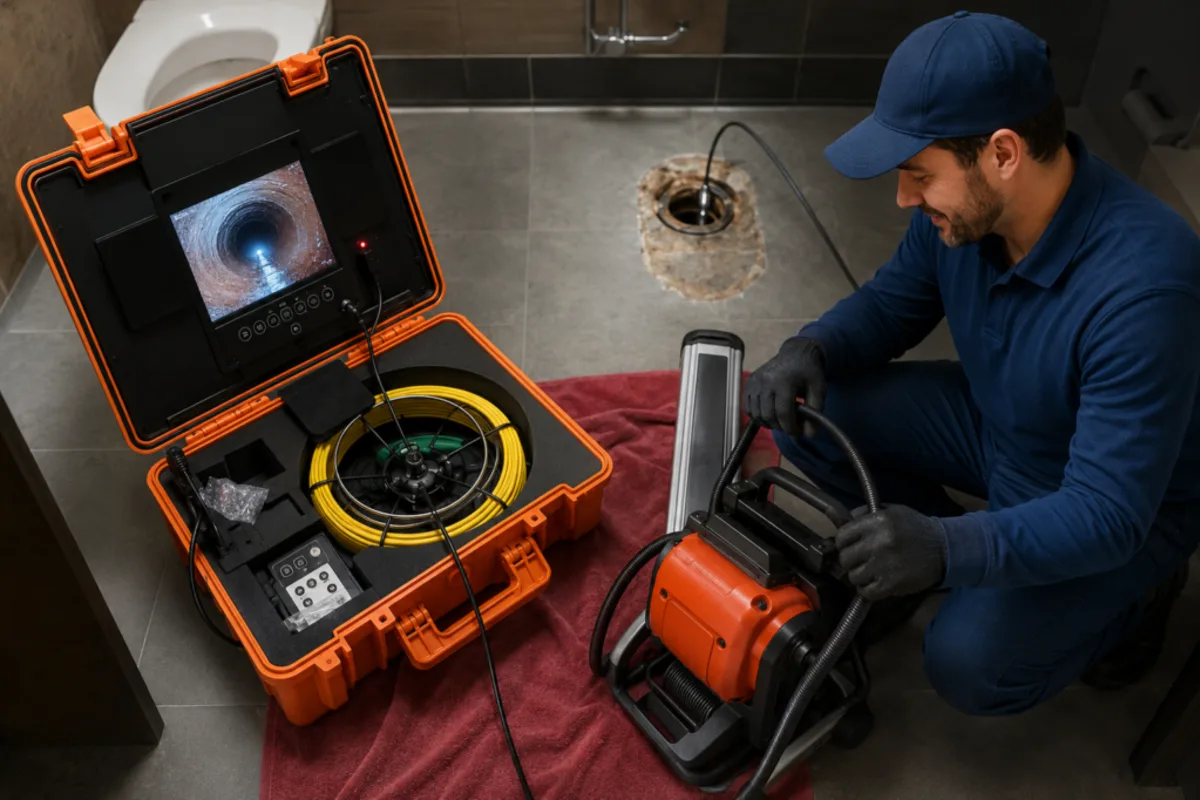 After · See the line’s real state
From one cleanout, the camera showed the shared line was at fault, not any single drain.
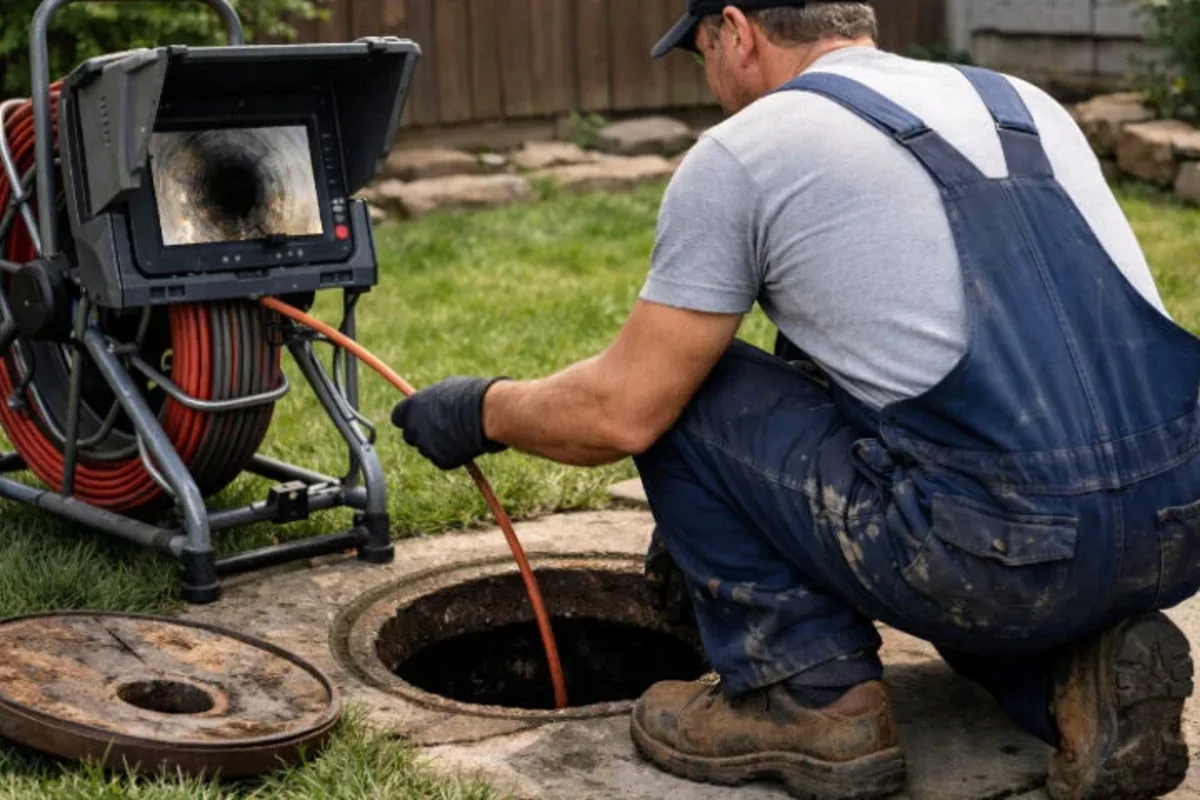 Before · Project 02
A blockage returns soon after cleaning. The camera helps show whether roots, an offset, damage, or heavy buildup is creating a repeat trouble spot.
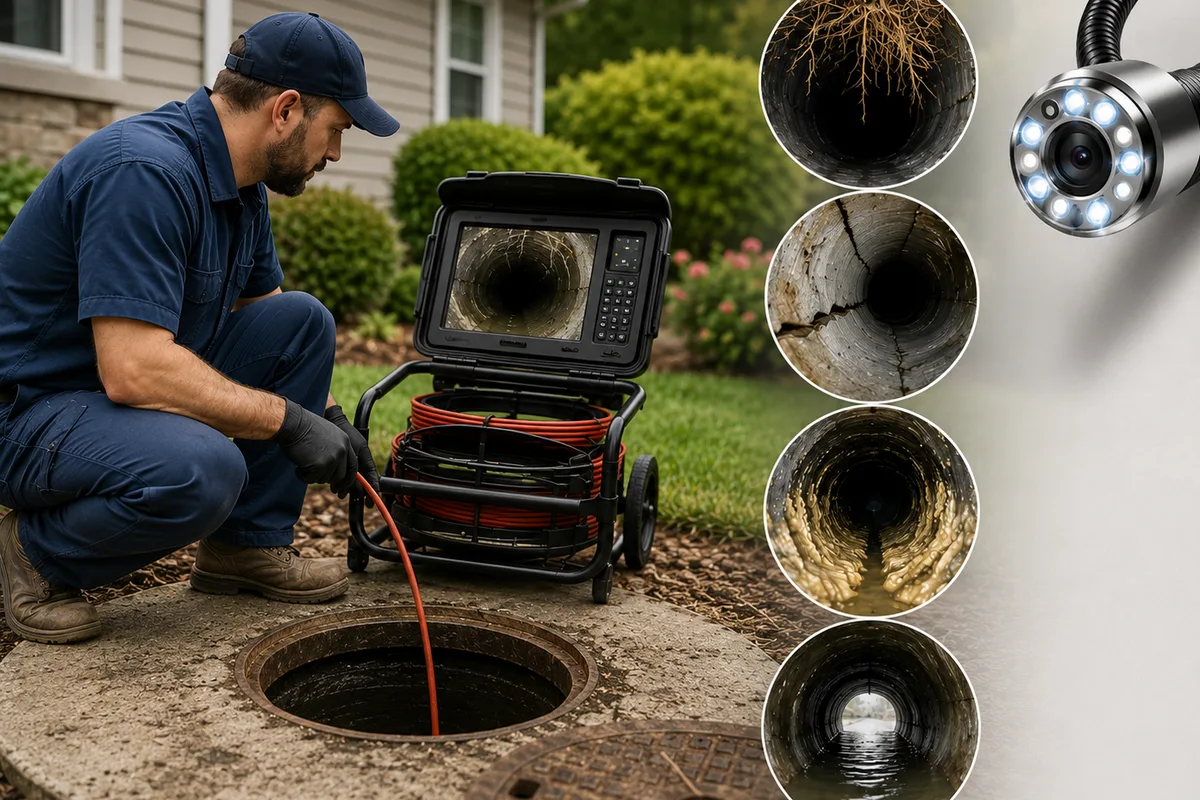 After · See the line’s real state
The footage pinned the repeat blockage to one offset joint, measured by distance from the entry point.
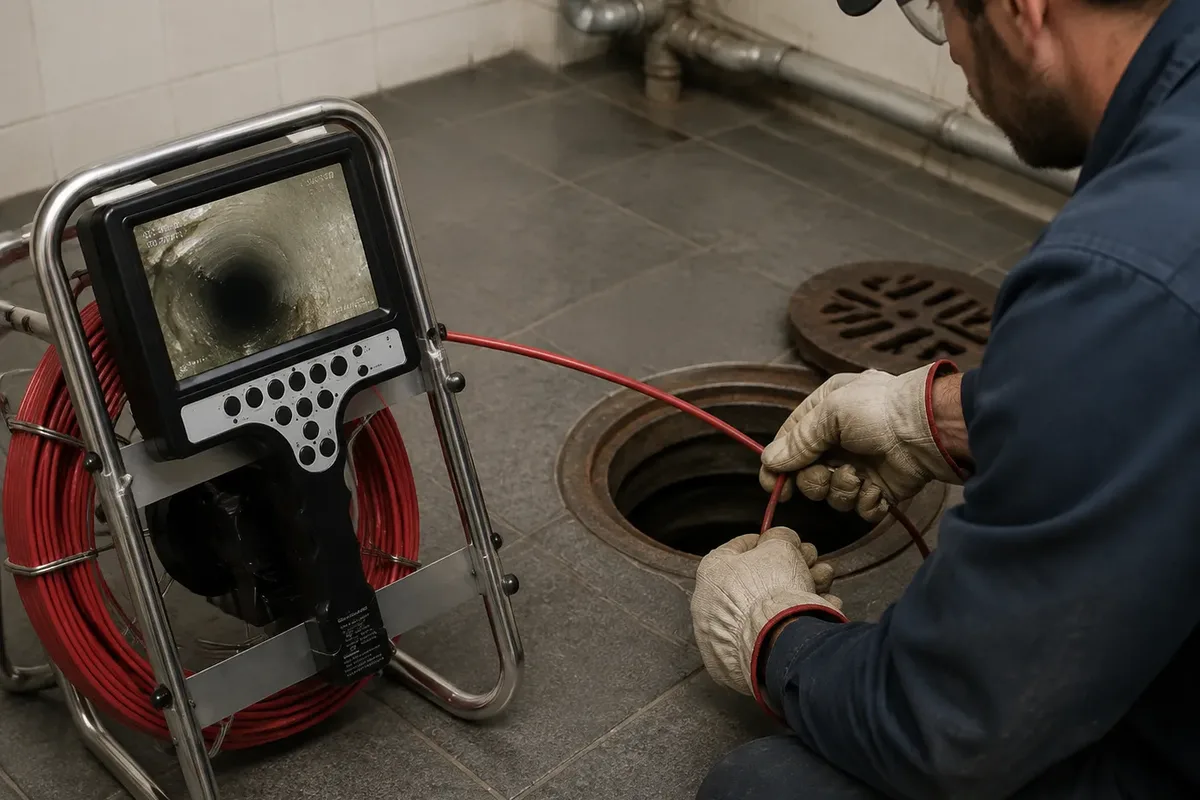 Before · Project 03
You need to understand a line before a purchase or repair. We record visible conditions and distance so the next decision is based on what the camera actually shows.
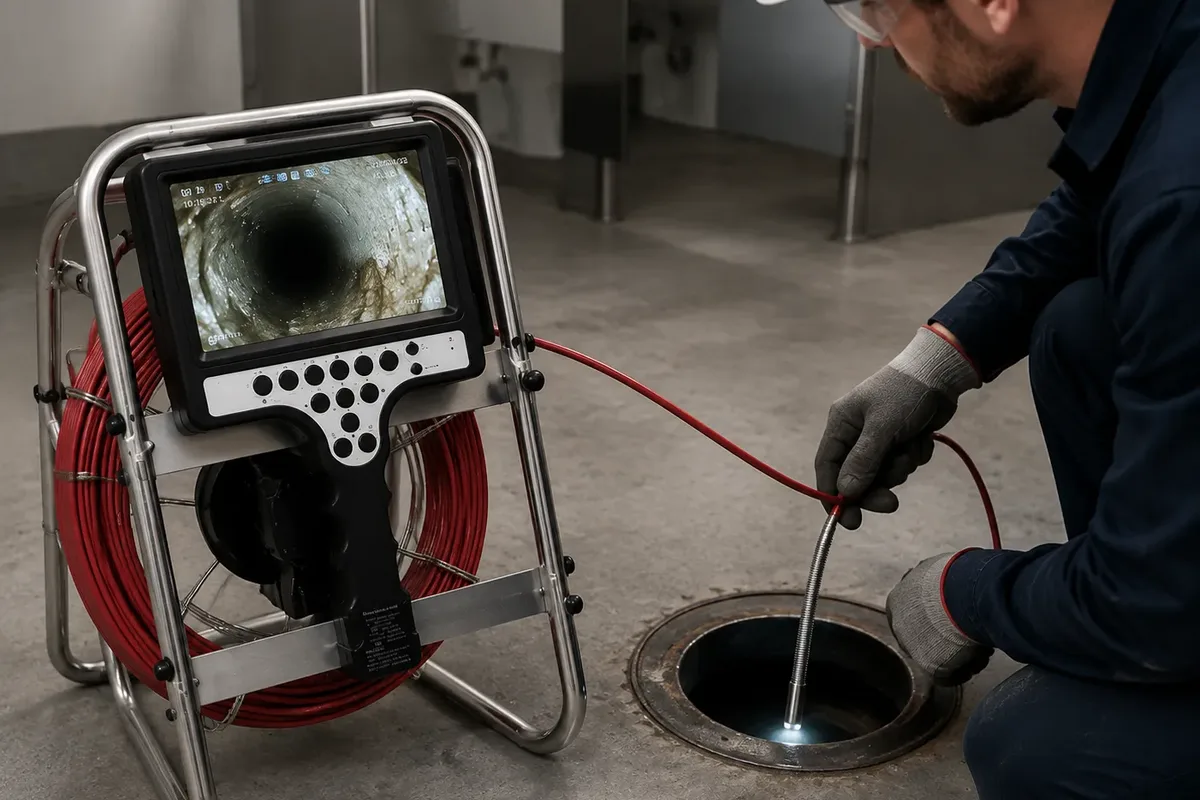 After · See the line’s real state
The owner could see the defect on screen, hear where it sat, and plan the repair around that one spot.
Sewer problems we track down
Sewer warning signs, spelled out one by one.
When the same drain clue keeps coming back, the line is telling us the trouble sits in one place. For each sign, we choose the camera view that fits it, set aside simple clogs that only look the same, and shrink the work to the one stretch of pipe that needs repair.
Two or more drains draining slowly together
Why it matters: When several drains slow at once, the trouble usually sits in the shared line, not in any one fixture.
Several drains slow or gurgle at the same time. We select an accessible entry point and inspect the shared line for blockage, standing water, or a change in pipe condition.
What the camera checks next: Choose a safe camera access point. From that entry point, the camera shows whether the shared line or one branch is at fault.
A blockage that returns after clearing
Why it matters: A clog that keeps coming back after clearing usually has a cause the snake cannot fix, like roots or a shifted joint.
A blockage returns soon after cleaning. The camera helps show whether roots, an offset, damage, or heavy buildup is creating a repeat trouble spot.
What the camera checks next: Record the line condition and distance. The distance reading ties each crack or root mass to a real spot in the yard or under the floor.
Gurgling sounds and smells from the lowest drain
Why it matters: Gurgling and sewer smell near low drains can mean the line is partly blocked or venting where it should not.
You need to understand a line before a purchase or repair. We record visible conditions and distance so the next decision is based on what the camera actually shows.
What the camera checks next: Explain visible defects and next repair questions. You hear what the camera saw, where it sat in the line, and which defect matters most.
More help beyond the camera
Help for leaks the camera cannot reach.
This page focuses only on sewer line camera inspection. If the trouble turns out to be a water leak rather than a drain line, look through the twelve other services we offer below.
Sewer Line Camera Inspection reviews
What customers say about the camera check.
Every review below is written for sewer line camera inspection. Below, customers tell which drain sign pushed them to call, what the camera found inside the line, and the clear next step they took away.
Locations we serve
Sewer Line Camera Inspection across Littleton-area communities.
Camera inspections run in houses, rentals, and workplaces all around the Littleton area. Pick the page for your neighborhood to read local line notes, or call and tell us the property address.
It can show visible cracks, roots, offsets, buildup, standing water, and obstructions inside an accessible pipe.
A camera shows the inside of the line, but not every leak is visually obvious. Other tests may be needed when the pipe looks clear.
A sewer scope can reveal line conditions that are not part of a normal visual home inspection.
A single slow drain is often a local clog. If several drains slow together, gurgle, or back up, the shared line is more likely and a camera helps.
Yes. The camera records distance as it travels, so a root entry, offset, or break can be tied to a location along the line.
Then the cause may sit outside the camera view, such as a vent issue or a problem past an access point. We explain what the camera ruled out and what to check next.
No. The camera enters through an existing cleanout or access point. Digging is a repair decision that comes after the inspection, if it is needed at all.
You get a clear summary of what the camera showed, where it was seen, and which findings matter for the repair decision.
Littleton office
Local sewer line camera inspection.
Our office sits in Littleton, a short drive from the homes and rentals we scope across the area. Please call before you come by, so our time goes to the drain trouble at your place, not the front desk.
2260 W Chenango Ave #400, Littleton, CO 80120DirectionsWant to see inside your sewer line?
Call Littleton Leak Solutions and tell us which drains act up and how often. We will help you pick the camera check that fits your line.
Call (720) 715-9731