
Reliable gas line leak detection
Reliable Gas Line Leak Detection in Littleton, CO
Gas concerns are safety concerns first. Trusted gas line leak detection follows safe testing practices for suspected leaks after occupants are out of danger and the utility has been contacted when needed. A suspected gas leak is a safety concern before it is a service call. After occupants are safe and the utility or emergency service has given direction, focused line testing can help identify the affected section for qualified repair.
About this service
A careful search built around gas line leak detection.
A suspected gas leak is a safety concern before it is a service call. After occupants are safe and the utility or emergency service has given direction, focused line testing can help identify the affected section for qualified repair.
A gas smell can drift along a hallway or rise far from the joint that leaks, so the spot where the odor seems strongest is not where we start. We note when the smell comes and goes, trace the gas line path through the home, and pick the safest first test the cleared site allows.
This service fits owners who need the faulty gas section named in writing before a repair crew touches the line. You get plain words, one clearly marked section, and a straight note when more than one branch still needs testing.
Why gas line work needs our care
Safety first. Answers in writing.
Our Littleton gas team works only on a cleared site, picks each test on purpose, and talks you through every reading in plain words, with no jargon. When we finish, you hold a written record of which section failed and what repair comes next.
No test starts until people are out, the utility has been called, and the site is cleared.
We test gas runs from valves and test ports, so walls and floors stay shut unless a reading demands more.
You get the failed section, the pressure numbers, and the repair step in plain, written words.
Gas lines in Littleton-area homes and shops have been part of our daily work since 2018.
Safety first, then testing
From first smell to the faulty section.
Tests run in a set order, and each result tells us if the next one is needed. That way the work stays safe and calm, and the repair team knows which section to open.
Start only after the area is safe
Work starts with the safety record and the line path, so the first pressure test has a clear job.
Test the relevant section of the system
Readings are checked section by section, and we only move on where the pressure will not hold.
Document the likely leak area for repair
The failed section gets written down in plain words, with the repair step the crew should take.
Three gas jobs, before and after
Three gas concerns, narrowed to one section each.
Each gas line leak detection project begins with a broad warning sign and ends with a smaller, evidence-led area for repair. In each pair, a broad safety worry turns into one named section that a repair crew can act on.
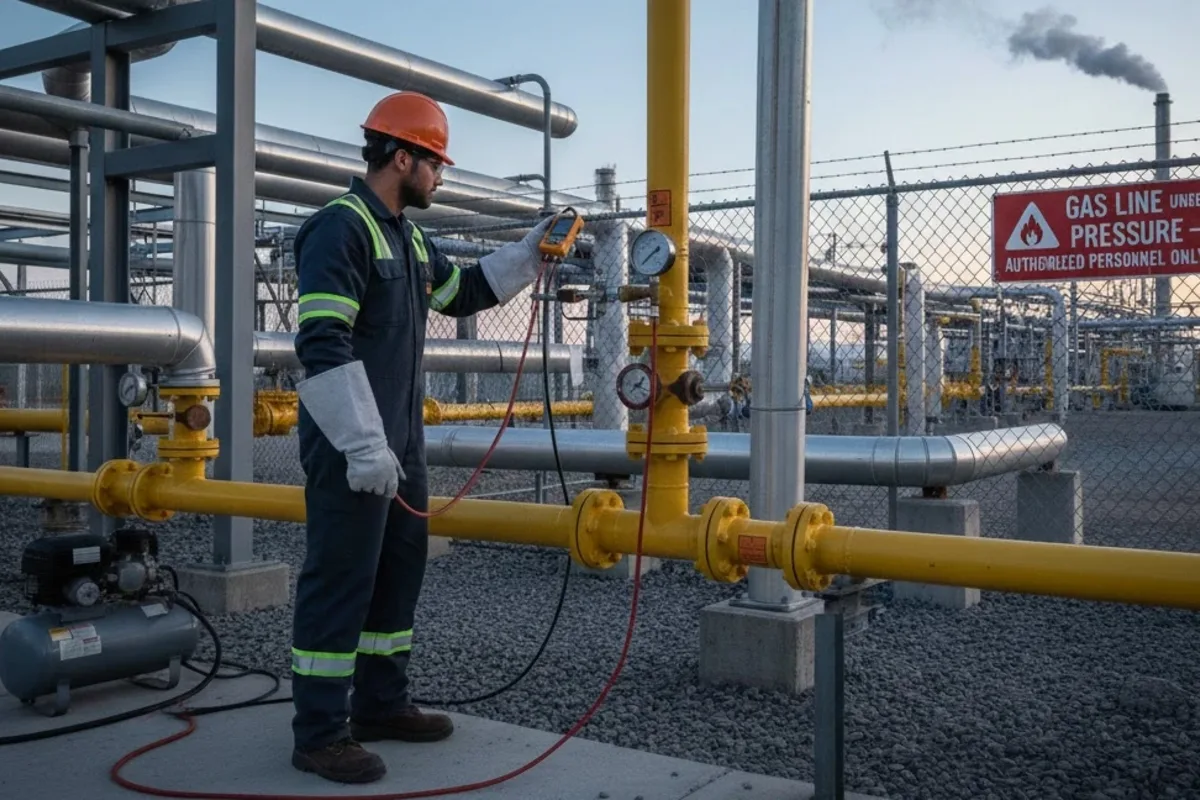 Before · Project 01
A sulfur-like odor appears near an appliance or line. Occupants leave first, switches and flames are avoided, and testing begins only after the site is cleared for safe access.
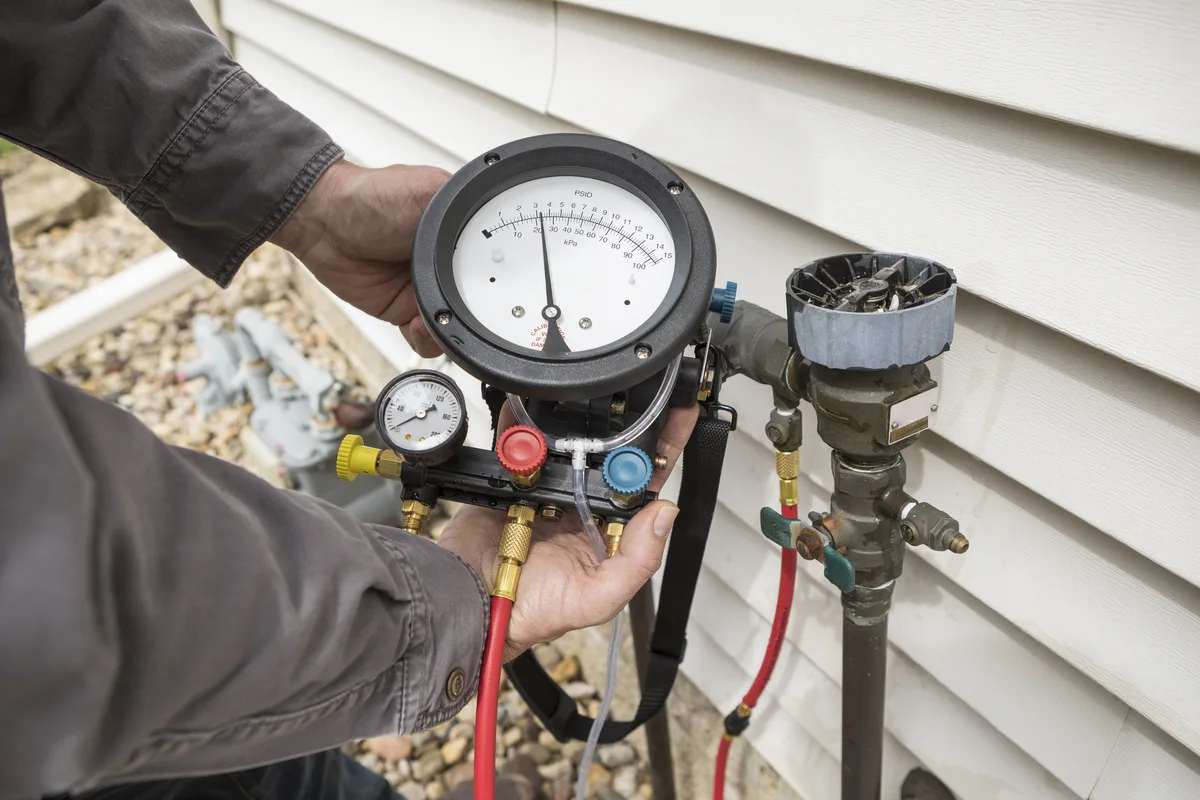 After · A safe repair plan
Testing started only on a cleared site, and the first checks centered on the fitting nearest the smell.
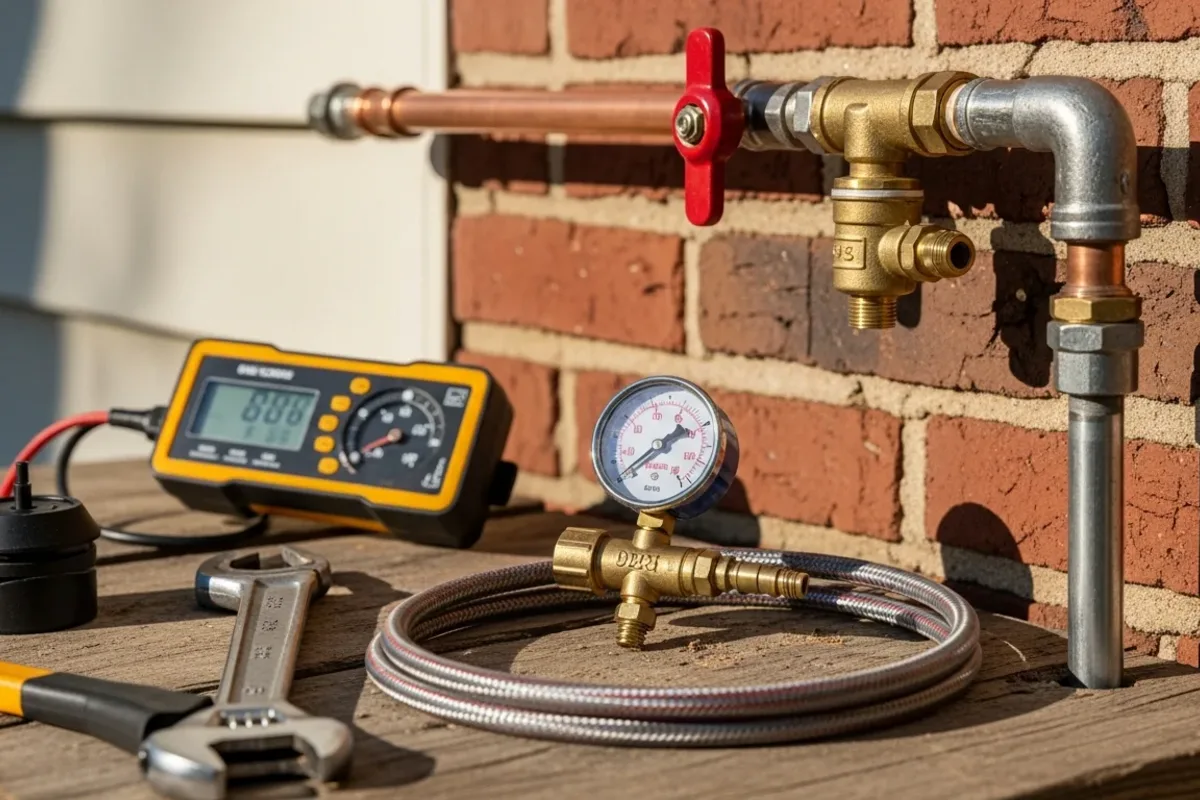 Before · Project 02
A hissing sound is heard near a fitting or buried route. We do not search with a flame; the relevant section is isolated and checked with approved methods.
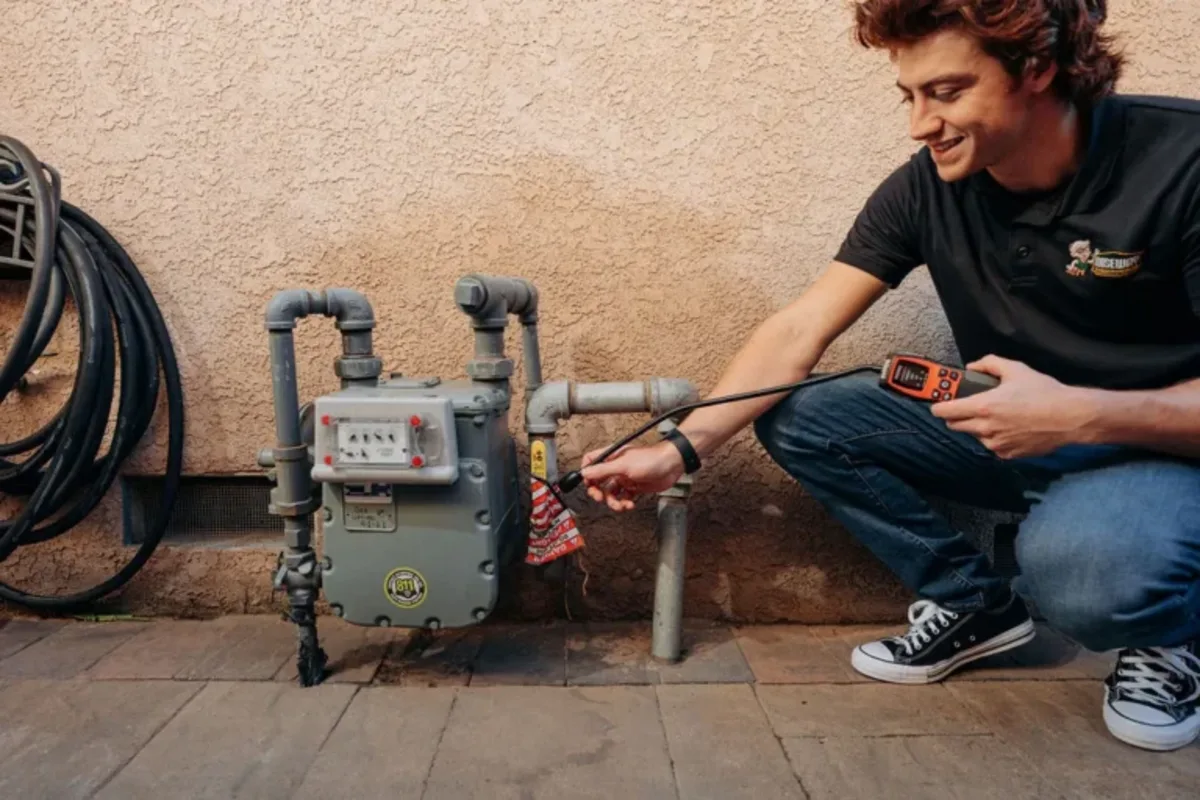 After · A safe repair plan
The isolated section that could not hold pressure became the marked repair target, written down for the crew.
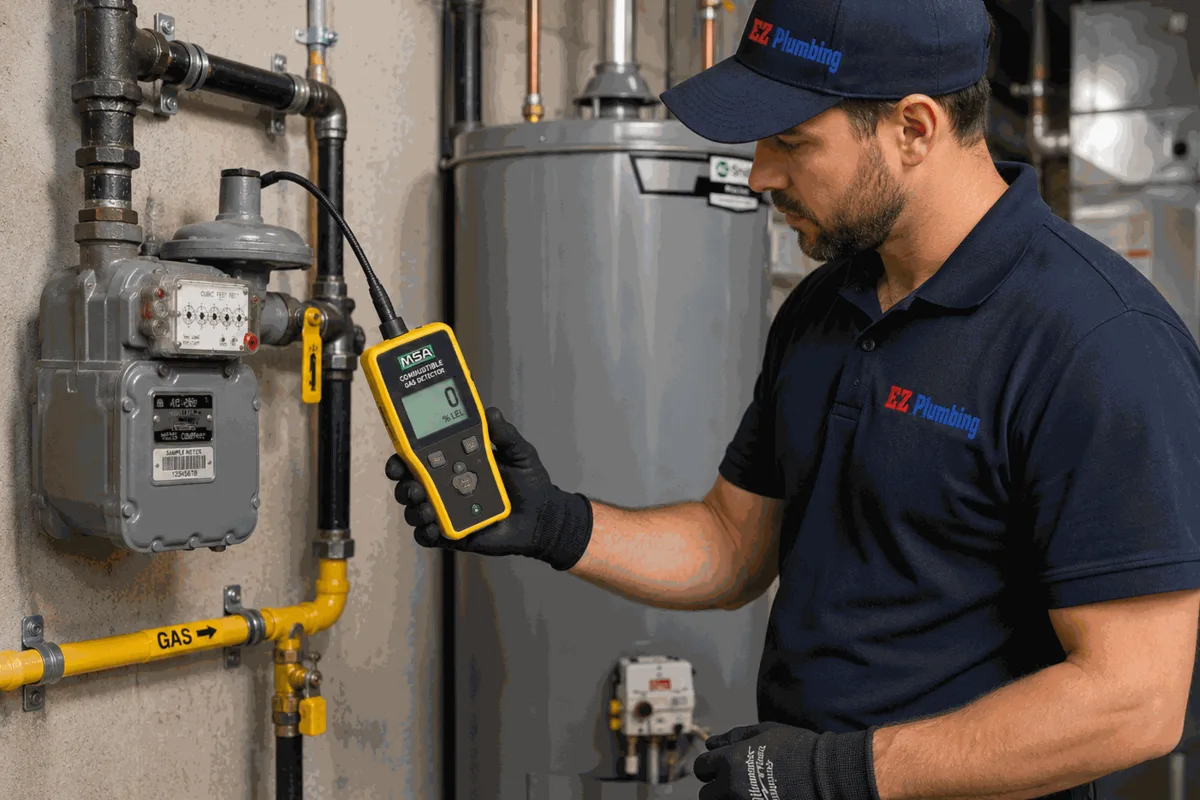 Before · Project 03
Vegetation dies along a buried fuel line or pressure will not hold. We review the route, isolate the line, and document the strongest evidence for the repair professional.
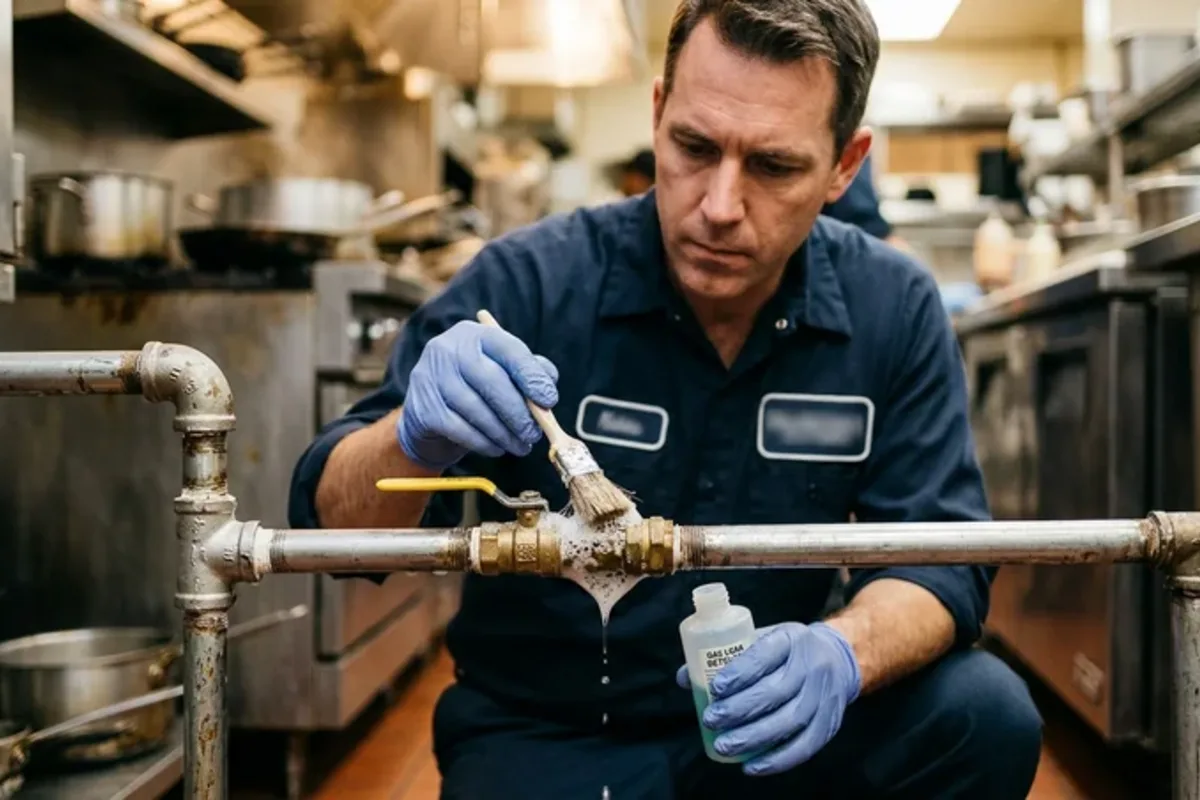 After · A safe repair plan
The owner received the exact run and joint in writing, plus the readings that ruled out the healthy lines.
Gas problems we track down
Gas warning signs, spelled out one by one.
A gas clue that does not go away means the line keeps sending the same message. For each sign, we match a safe test to it, set aside harmless causes that smell or sound alike, and shrink the search to the one section that needs repair.
A sulfur-like or unusual gas odor
Why it matters: That rotten-egg smell is added to gas on purpose, so any trace of it deserves a same-day response.
A sulfur-like odor appears near an appliance or line. Occupants leave first, switches and flames are avoided, and testing begins only after the site is cleared for safe access.
What we test along the line next: Start only after the area is safe. Only then do we test the line near the smell, one safe step at a time.
A faint hiss near a pipe or appliance
Why it matters: A hiss near a fitting can mean gas leaving under pressure, which is never a wait-and-see problem.
A hissing sound is heard near a fitting or buried route. We do not search with a flame; the relevant section is isolated and checked with approved methods.
What we test along the line next: Test the relevant section of the system. A section that cannot hold pressure is the one we mark for the repair crew.
Grass dying in a strip above a buried line
Why it matters: Plants dying in a line over a buried pipe can mean gas is pushing soil gas away from the roots below.
Vegetation dies along a buried fuel line or pressure will not hold. We review the route, isolate the line, and document the strongest evidence for the repair professional.
What we test along the line next: Document the likely leak area for repair. The notes name the exact run and fitting, so the repair crew does not have to guess.
Other leak services
Help for leaks beyond the gas line.
This page focuses only on gas line leak detection. If your problem turns out to sit in a water or drain line instead, look through the twelve other services we offer below.
Gas Line Leak Detection reviews
What customers say about our gas work.
Every review below is written for gas line leak detection. Below, customers tell what gas sign scared them first, how the testing kept everyone safe, and the clear repair step they took away.
Locations we serve
Gas Line Leak Detection across Littleton-area communities.
This safety-first gas testing reaches houses, rentals, and workplaces all around the Littleton area. Choose your area below for neighborhood notes, or phone us with the address where the smell is strongest.
Leave immediately, avoid switches, phones, engines, and flames near the building, then call the gas utility or emergency services from a safe place.
No. Do not use a flame or create a spark. A suspected gas leak needs trained help and utility guidance.
Line testing depends on the system and site. Call with the fuel type and the signs you noticed so the safest next step can be discussed.
Once the utility or emergency service says the area is safe to enter, focused line testing can identify the section that needs repair. Follow their guidance first.
Yes. The relevant branch can be isolated and tested so the whole system is not treated as one problem.
It shows whether the isolated section holds pressure or loses it. A loss points to a leak in that section, which is then narrowed further.
Testing begins only after the site is cleared for safe access. If anyone smells gas again during the visit, people leave and the utility is called.
Yes. You get the affected section, the test result, and the practical next step in clear words the repair professional can act on.
Littleton office
Local gas line leak detection.
Our office sits in Littleton, a short drive from the homes and rentals we serve across the area. Please call before you come by, so our time goes to the gas concern at your place, not the front desk.
2260 W Chenango Ave #400, Littleton, CO 80120DirectionsSmell gas or hear a hiss? Act now.
Call Littleton Leak Solutions once you are outside and safe, and tell us where the smell seemed strongest. We will walk you through the safe order of steps from there.
Call (720) 715-9731